Mysterious, a little scary, and somehow endearing. [Biri Biri Monster | Yokai Specialty Store]
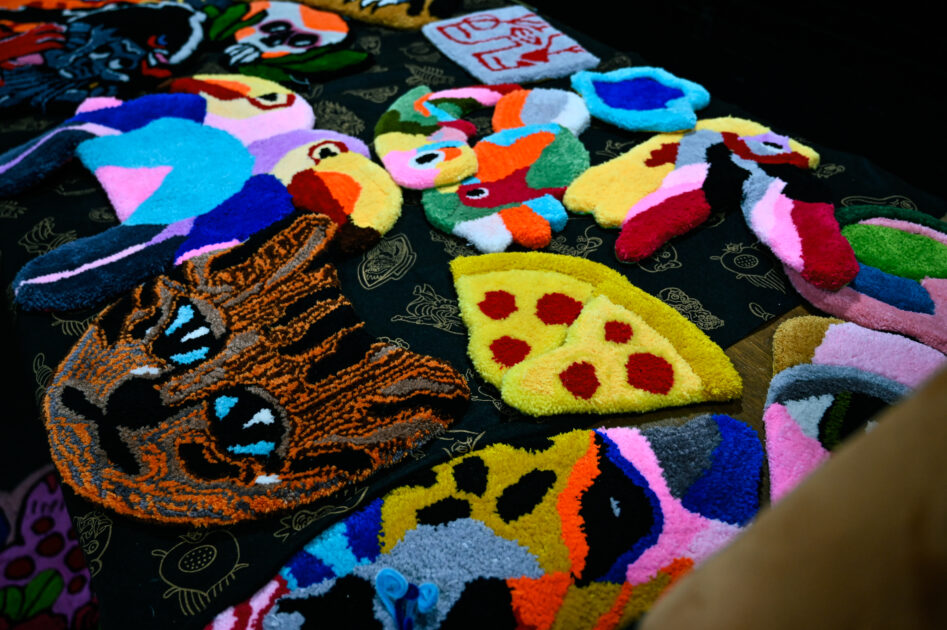
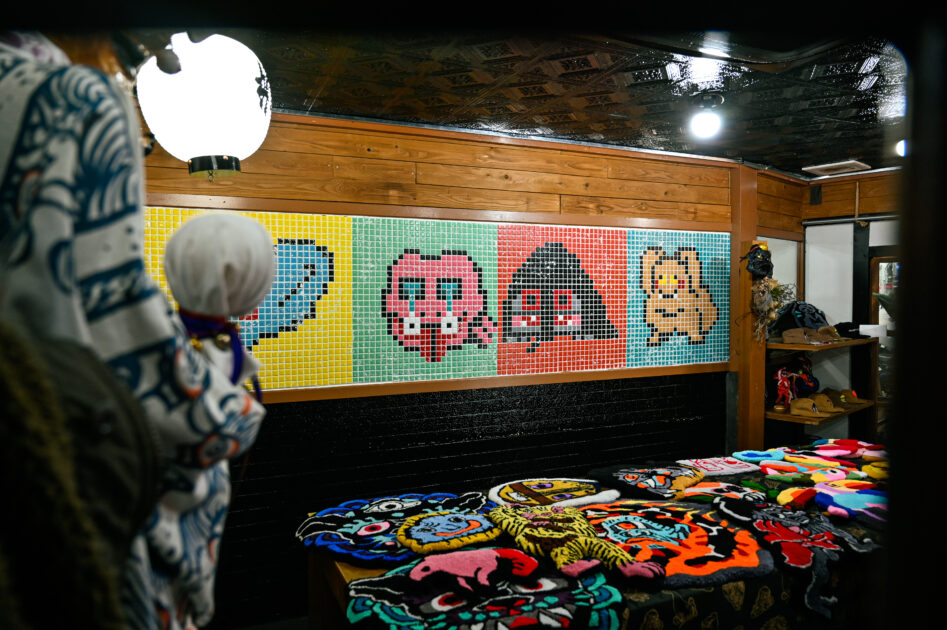
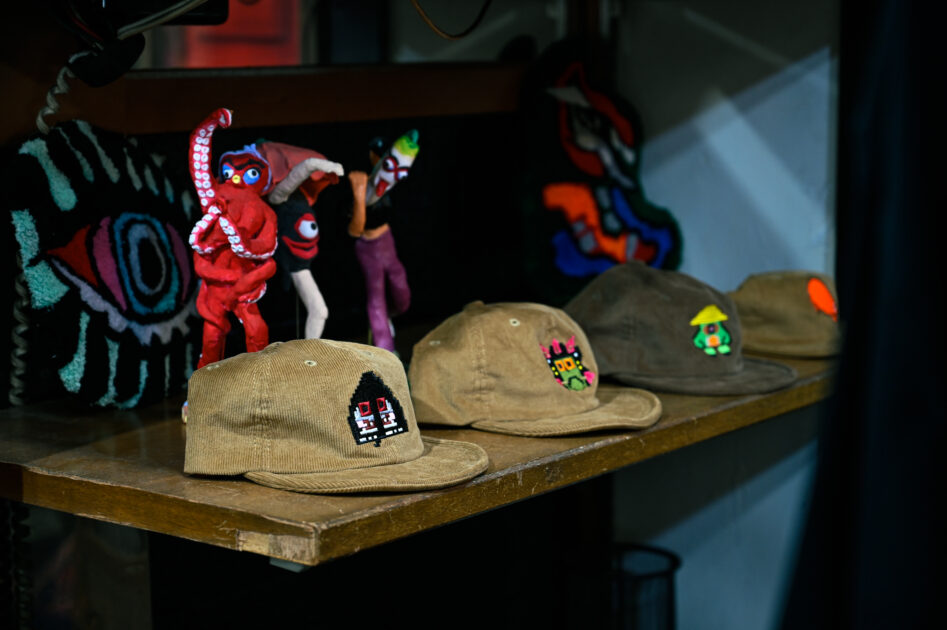
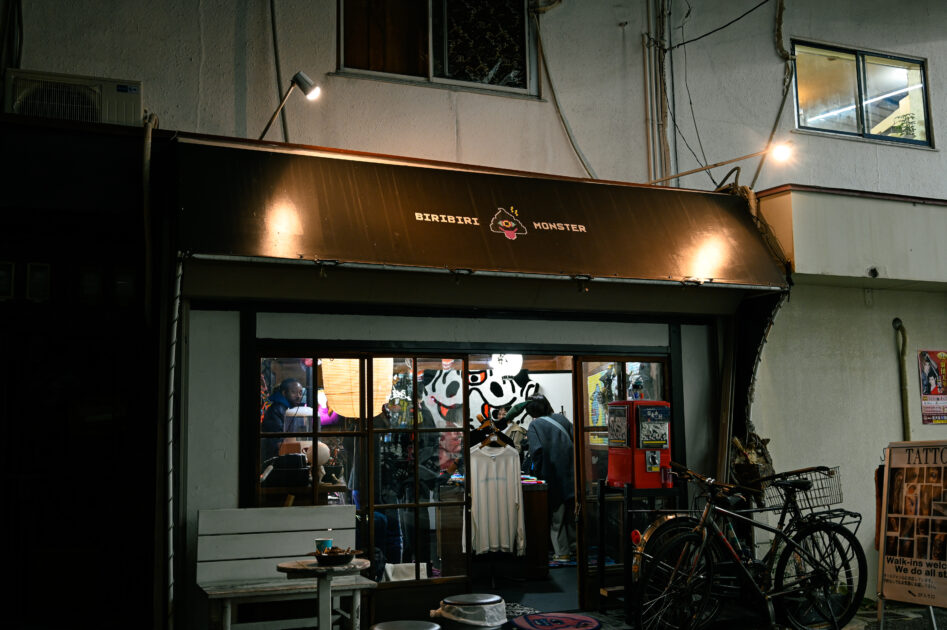
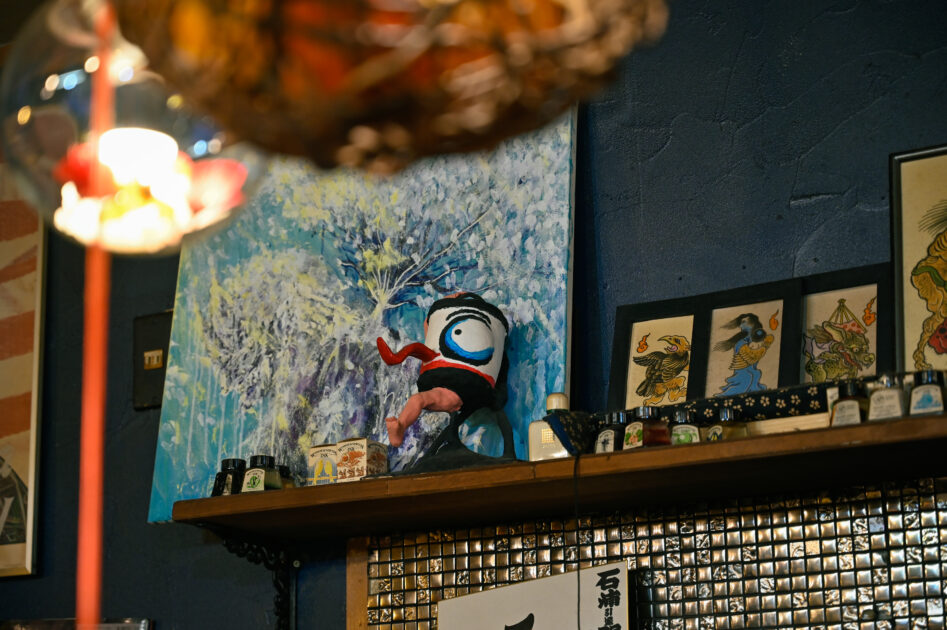
Just beyond the shopping arcade, a mysterious world seems to float gently through the glass. At this shop, “Biri Biri Monster,” where even the T-shirts, caps, and mats are themed around “yokai,” the atmosphere is flashy yet somehow refined—playful on the surface, yet strangely understated.
It’s a bit scary, yet it makes you laugh. That kind of “ambiguity” suits the town of Fuse perfectly. Today, too, the yokai suddenly appear in the nooks and crannies of the town, sending a tingling sensation through your senses.
| Address | 1-11-15 Ashidai, Higashiosaka City, Osaka PrefectureGoogleMap |
|---|---|
| Business Hours | 1:00 PM–8:00 PM |
| Closed Days | Thursday |
I had a feeling there was something on the other side of the glass
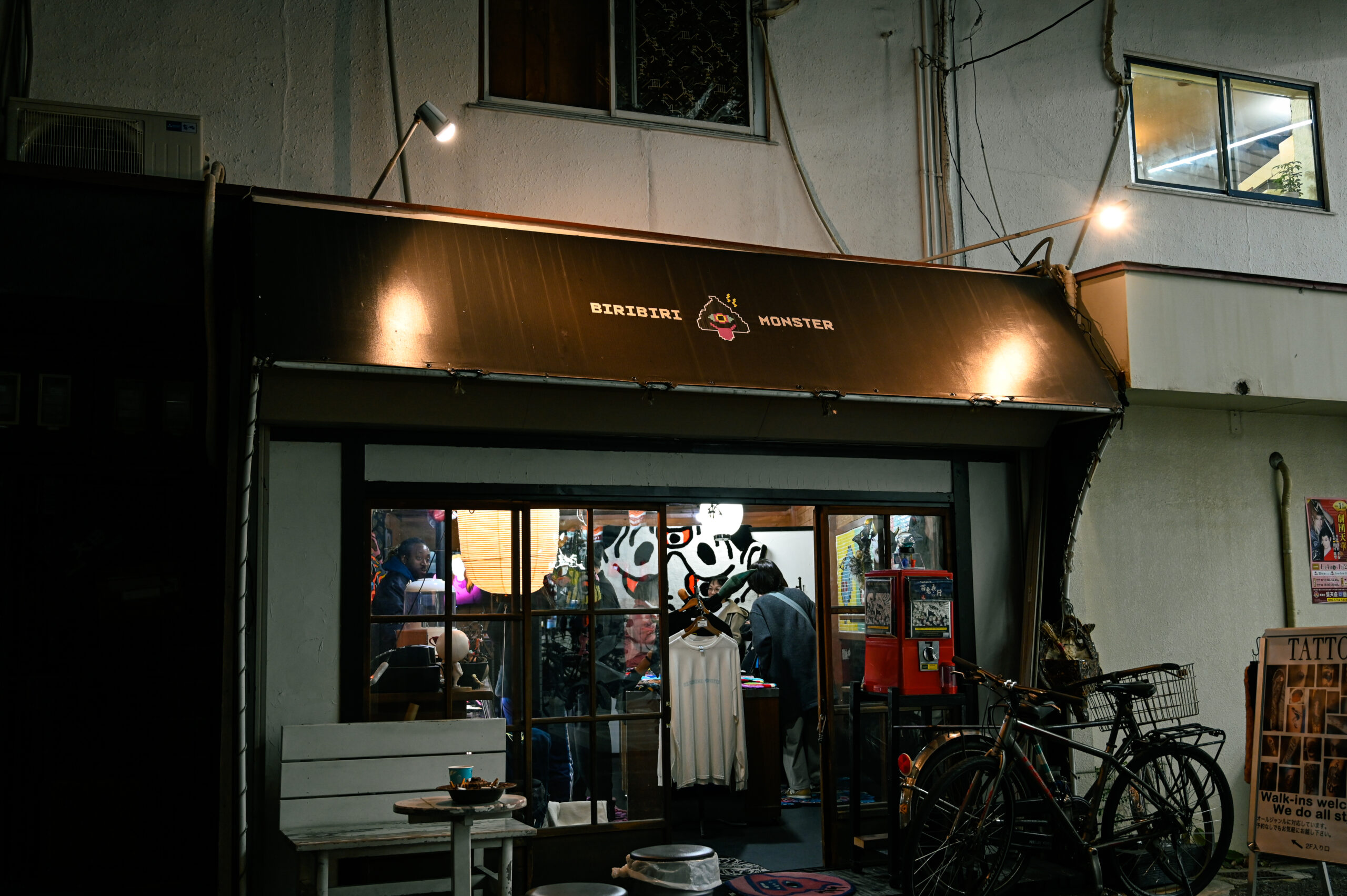
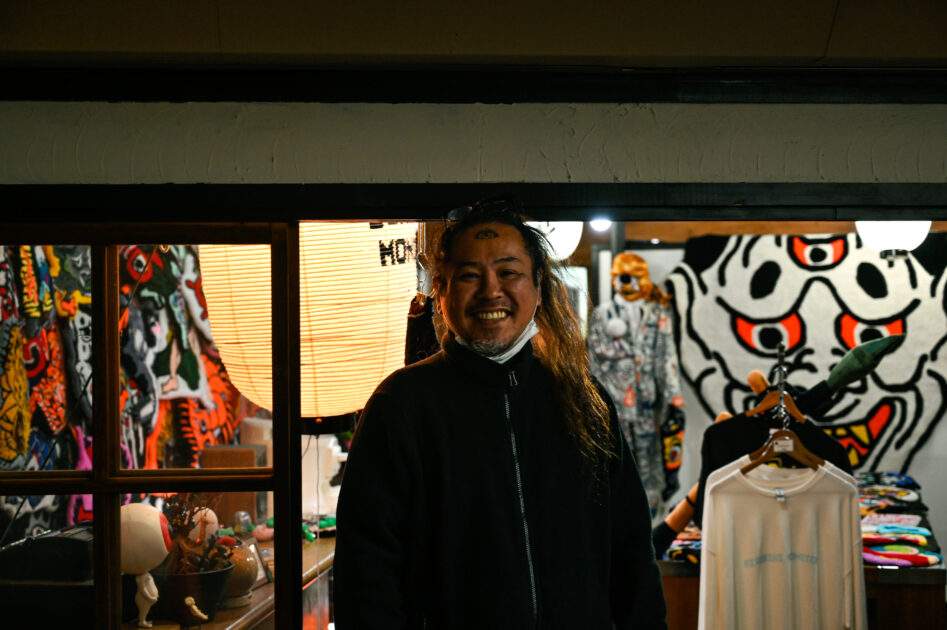
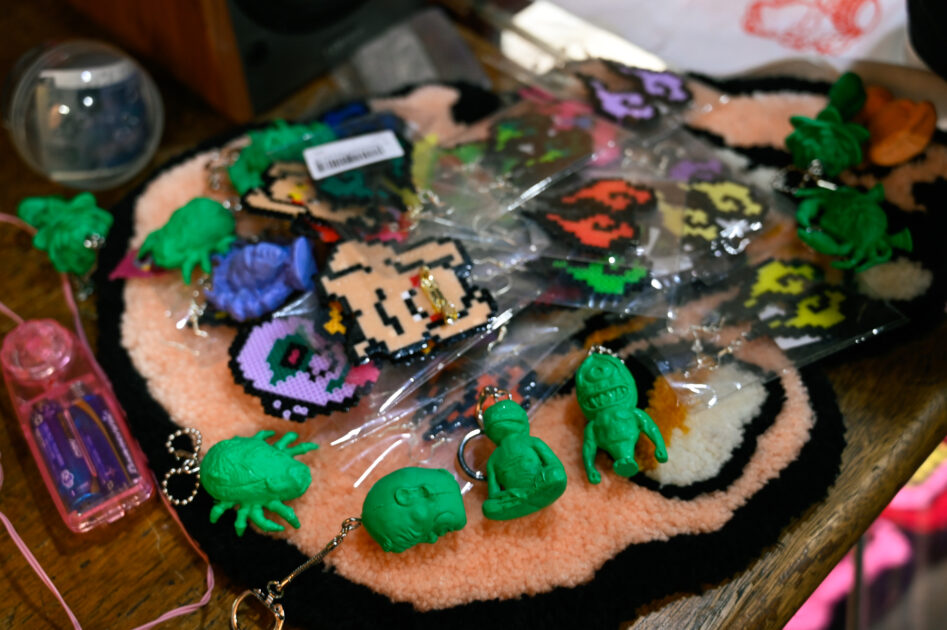
I wandered down Honmachi-dori Shopping Street from Fuse Station. After passing through the bustling crowd and turning slightly onto a side street, I came across a shop window glowing quietly. Peering inside, I saw a lineup of colorful “faces.” Caps, long-sleeve T-shirts, and mats covering the entire wall. They were all yokai.
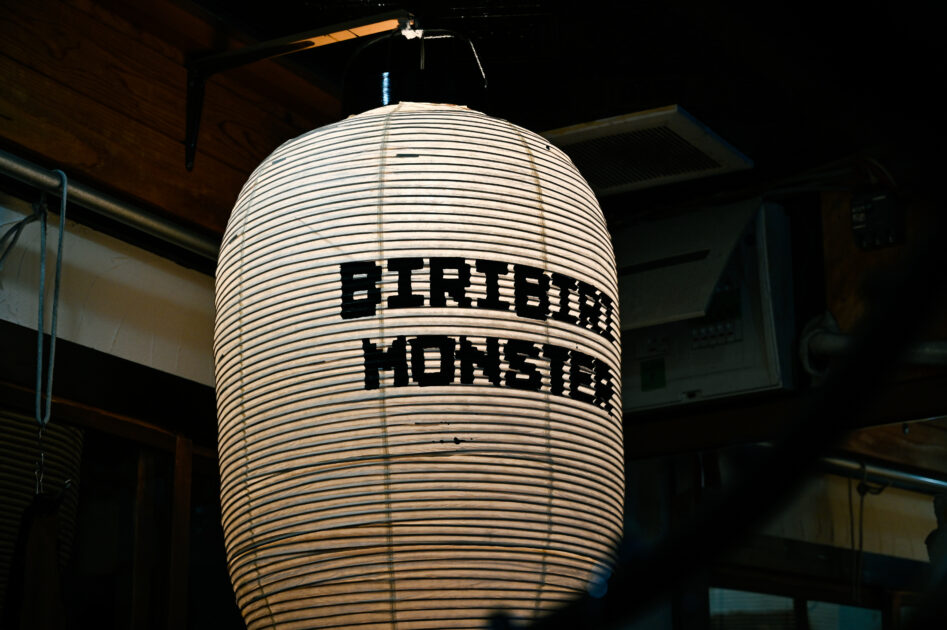
This is “Biribiri Monster”—a slightly mysterious concept shop themed around yokai. It’s cute, but also a little scary. It seems lighthearted, yet there’s a subtle weight to it. Everything is blended together “just right.”
Folk tales might still be alive
As I pondered why this shop is located in Fuse, a story I’d heard long ago suddenly came to mind.
Take, for example, “Ubagabi,” a legend passed down at Hiraoka Shrine. It tells of the spirit of an old woman who stole oil from a shrine lamp, which on rainy nights takes the form of a fireball and dances through the sky—such traditions still quietly linger in this land.
It’s not a matter of “believing or not believing,” but rather an atmosphere that makes you feel “there’s something in the air.” That must be why the Biri-Biri Monster fits so naturally into this town. Perhaps yokai aren’t just “folktales”—they might still be living in the corners of this town even now.
Capturing that aura and turning it into art.
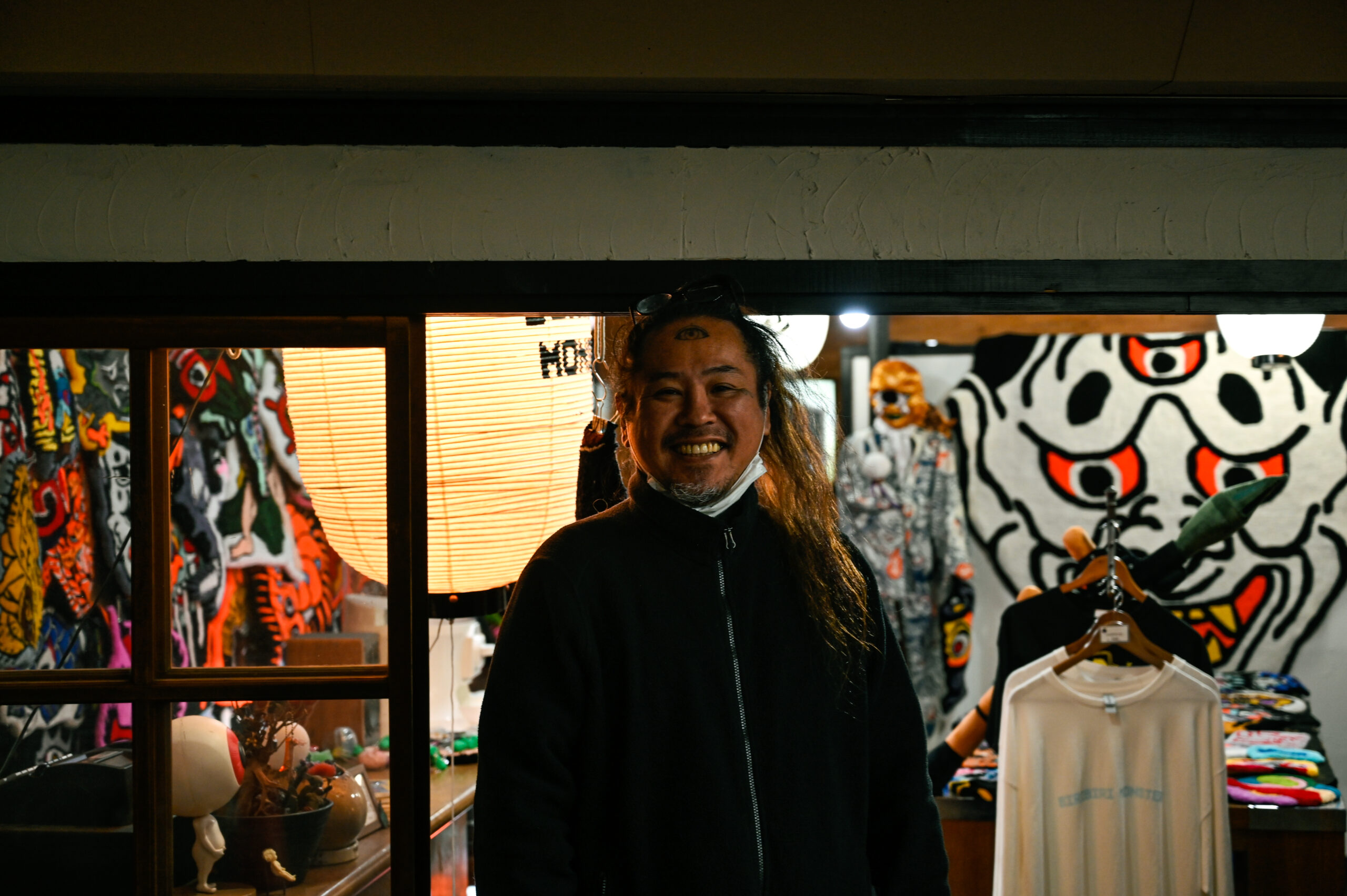
The shop is run by its owner, Gin-san. A tattoo artist himself, he’s covered head to toe in tattoos, which might make first-time visitors instinctively put their guard up. But the moment he speaks, that impression changes completely. He’s gentle and kind, and his speech is occasionally laced with a hint of a Hiroshima accent.The passion behind his words comes across quietly, yet unmistakably.
“I think Japanese people have always had a knack for ‘anthropomorphism.’ Even as civilization advances, we give names to invisible things and try to preserve them by giving them form. I feel that’s at the root of our yokai culture.”
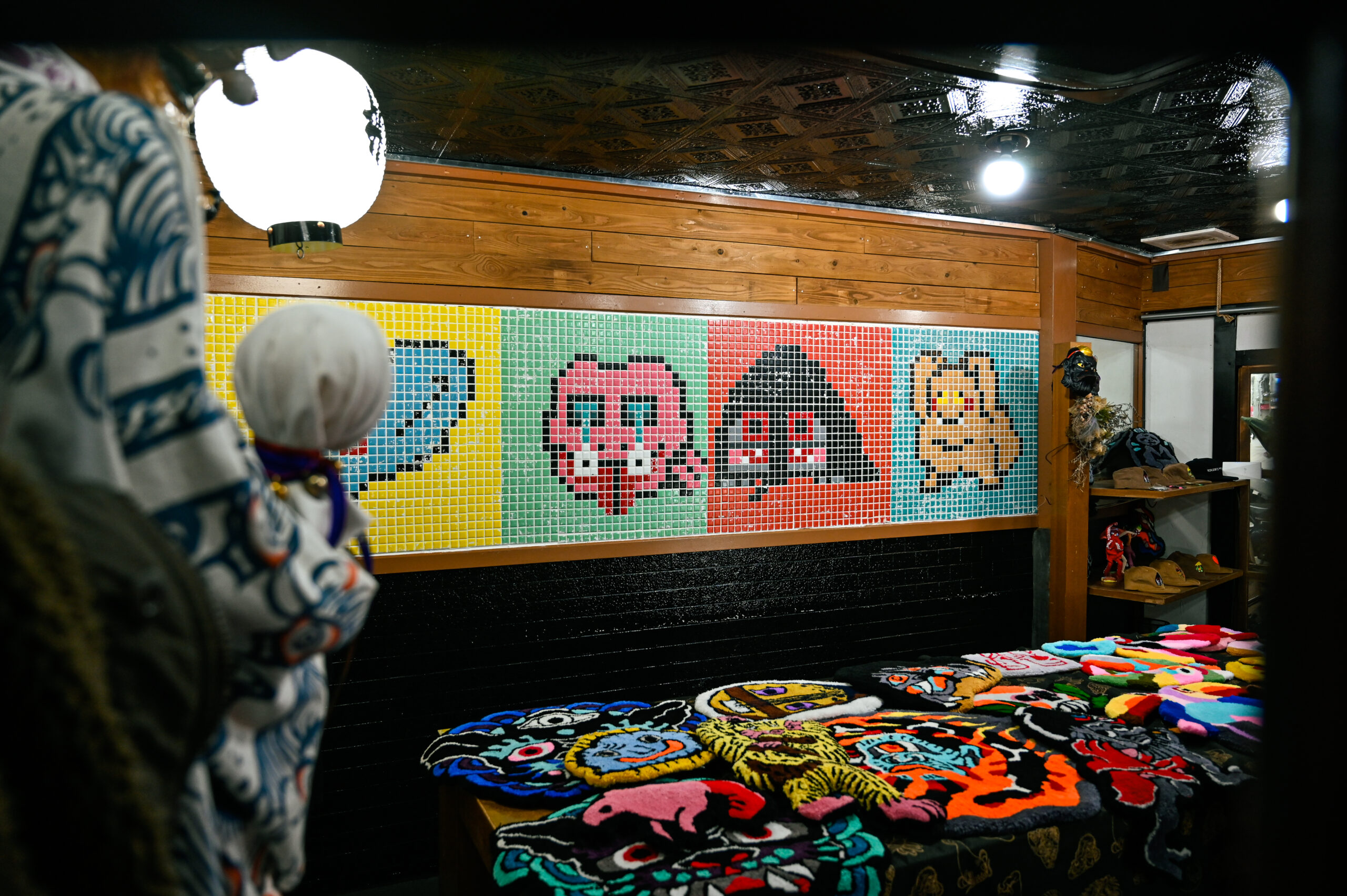
Indeed, yokai aren’t just characters. They feel like “someone” imbued with human quirks and memories, and that same warmth quietly permeates Gin-san’s work as well.
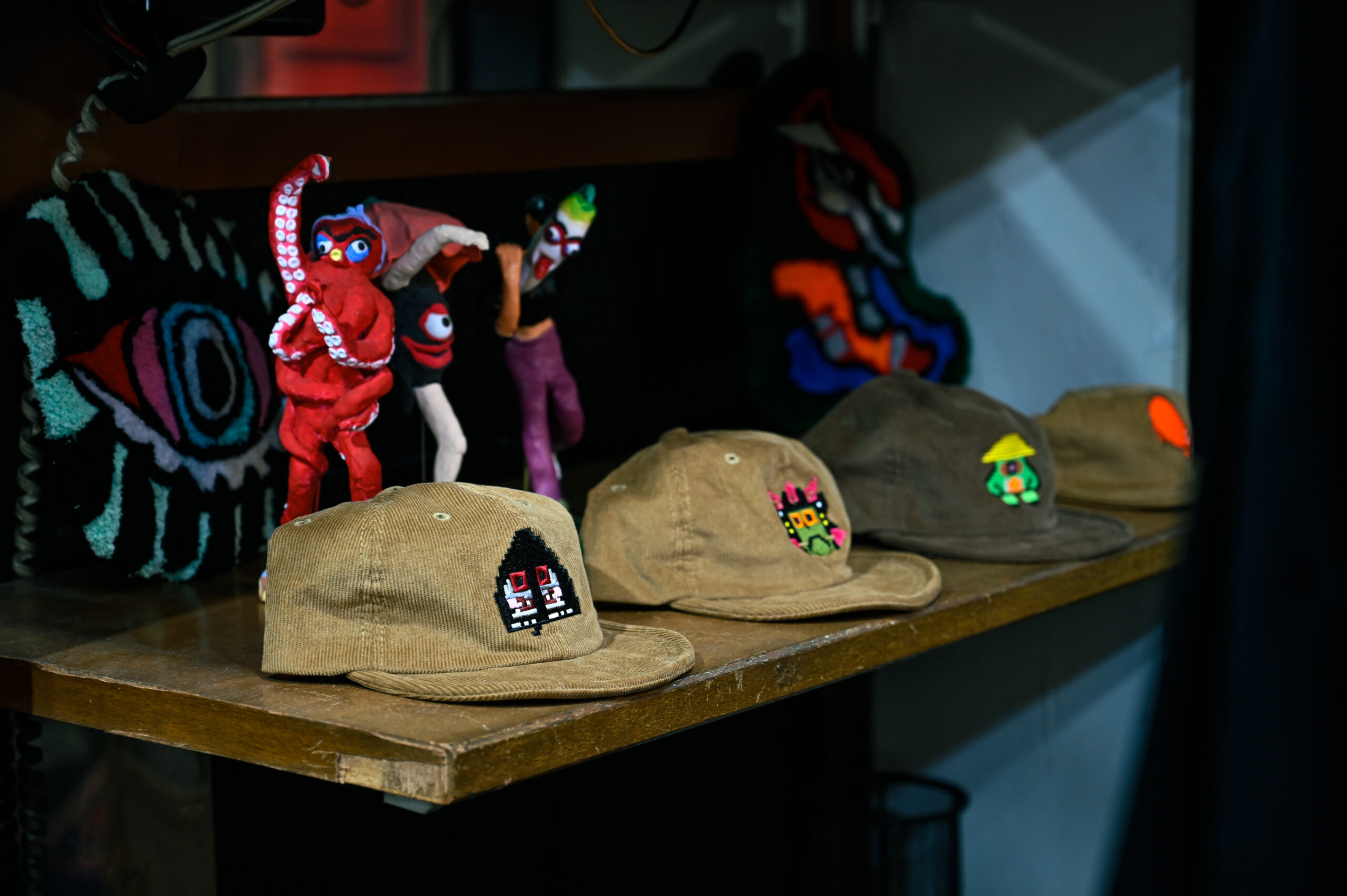
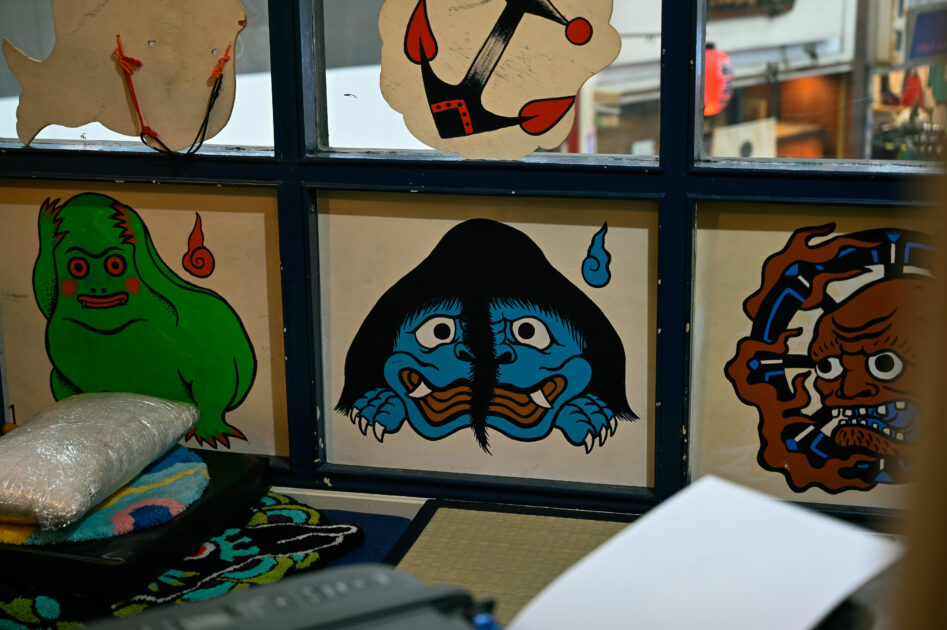
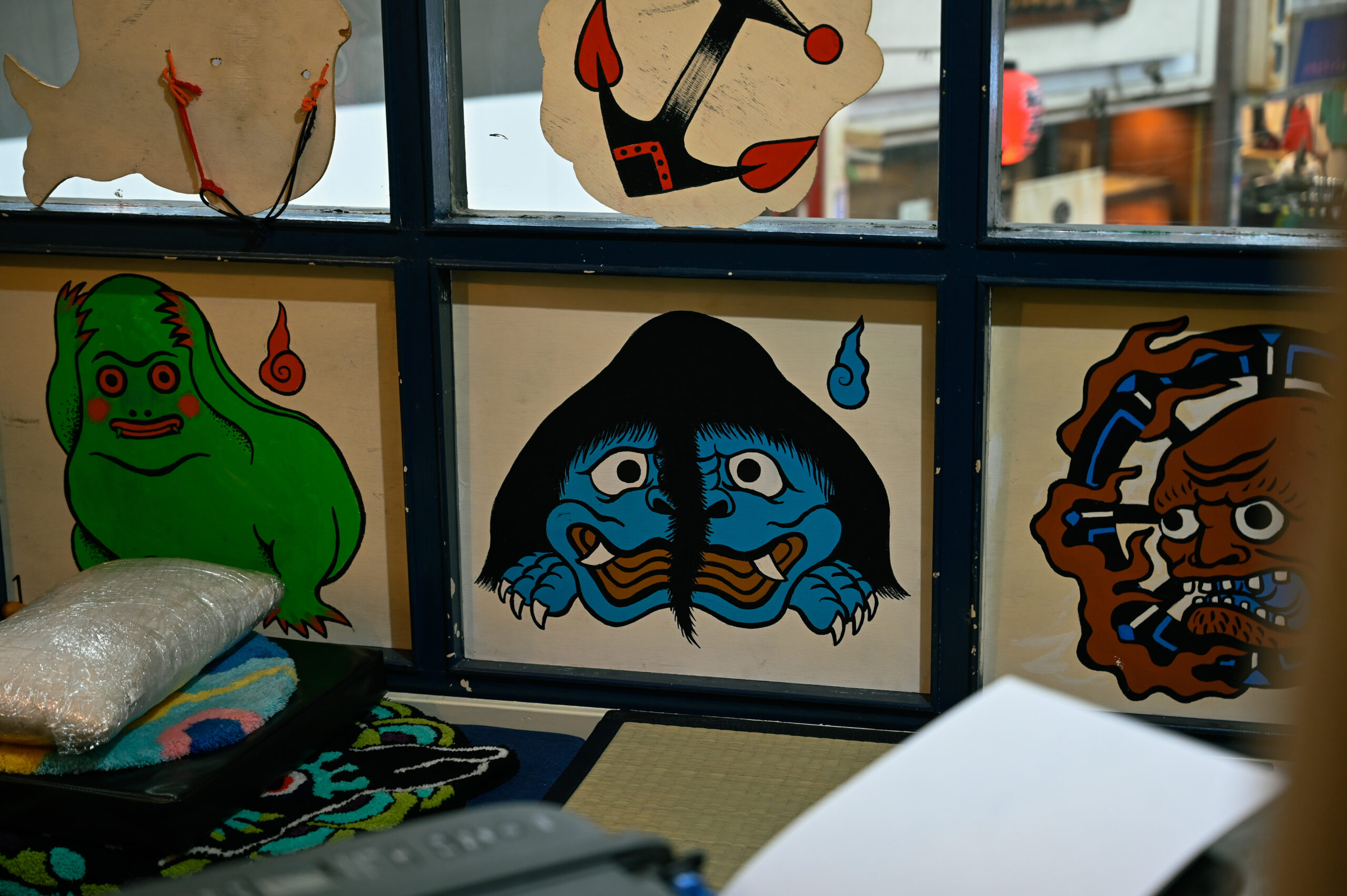
Painting old legends with modern colors—that sensibility shapes the artistic style of this shop. The yokai, painted in eye-opening, vivid colors, appear pop at first glance. But beneath the surface, stories breathe quietly and tenaciously.
They’re cute, yet a little scary. But you can’t help but love them.
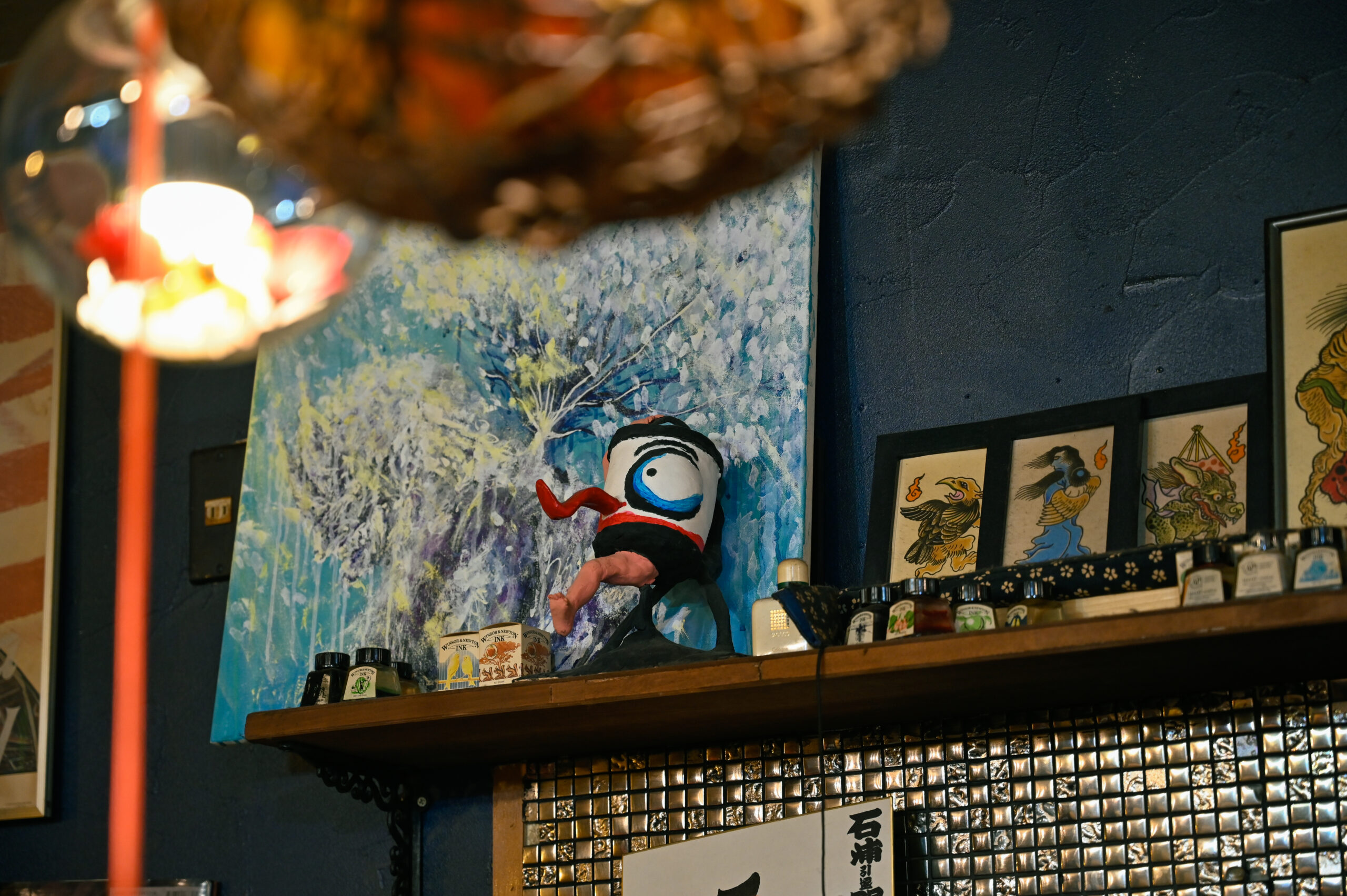
The mats covering the walls are incredibly lively, yet they never feel intrusive. Some have three eyes; others stick out their tongues. But there’s something very human about them—and they’re surprisingly endearing.
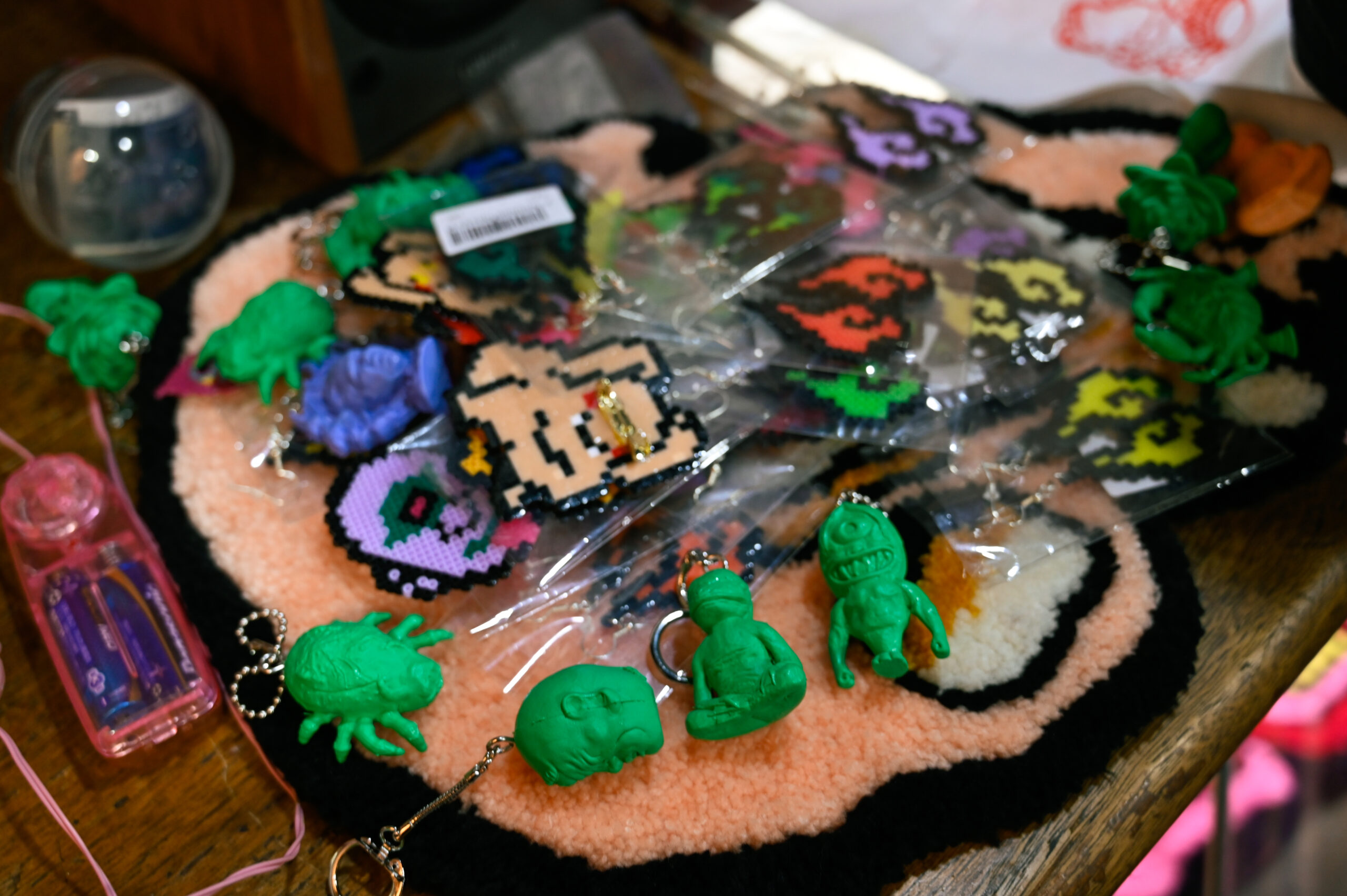
“Yokai used to be scary, didn’t they?”—This exhibition quietly turns that image on its head. The moment your eyes meet theirs, you can’t help but chuckle. A little scary, yet somehow endearing. That gradient of emotions truly comes alive in this space.
Try Making “Your Own Little One”
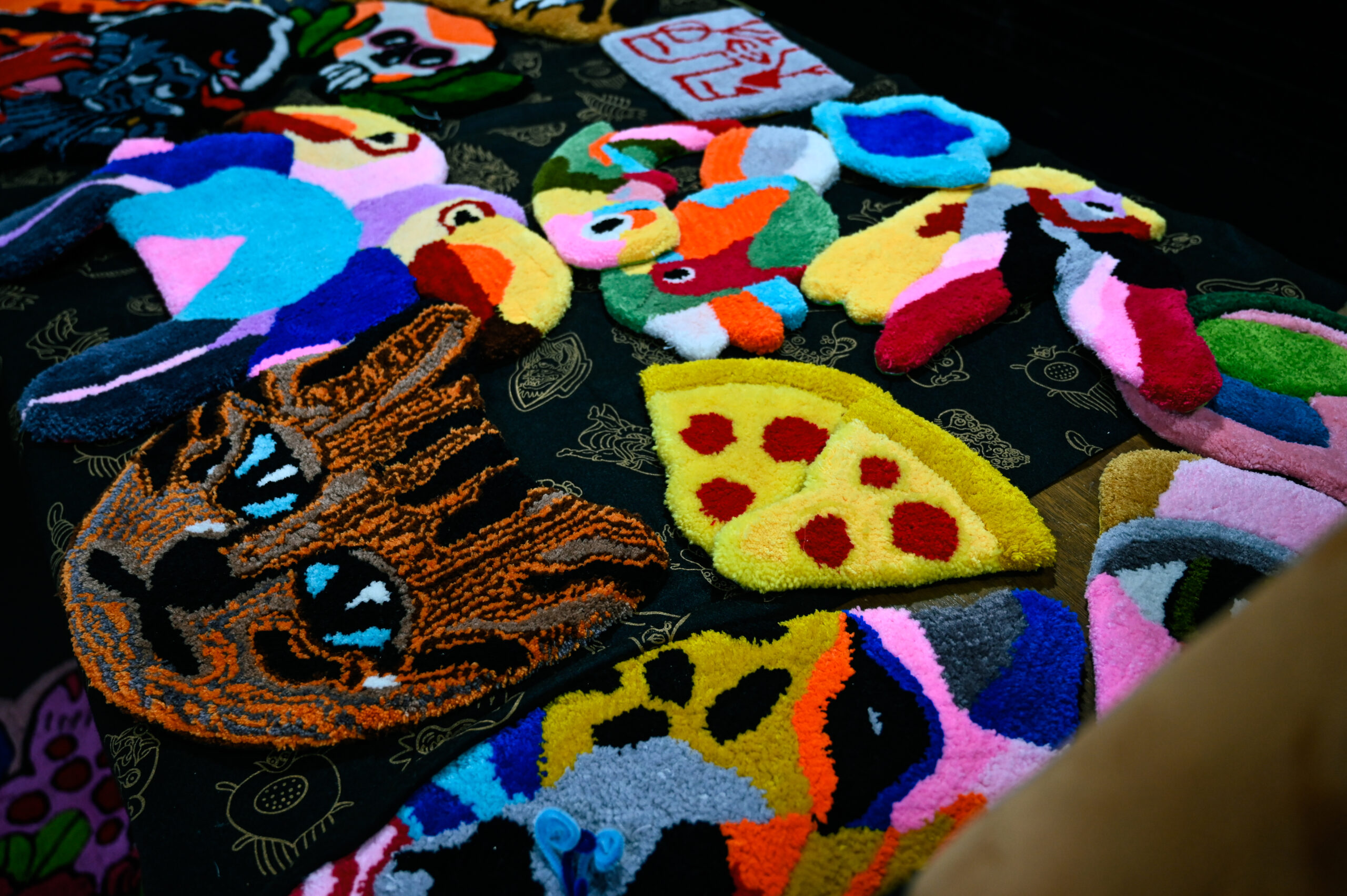
If you make a reservation, you can try your hand at tufting. This authentic mat-making process—where you shoot yarn into the fabric using a special gun—is easy enough for even beginners to enjoy.
Of course, the motifs are yokai. The process of designing and creating your very own “Hitotsume” or “Nurikabe” is indescribably fun. When you stand before your finished piece, you’ll want to say, “This is my little one.” It leaves you with a strange sense of attachment.
Signs of Yokai All Over Town
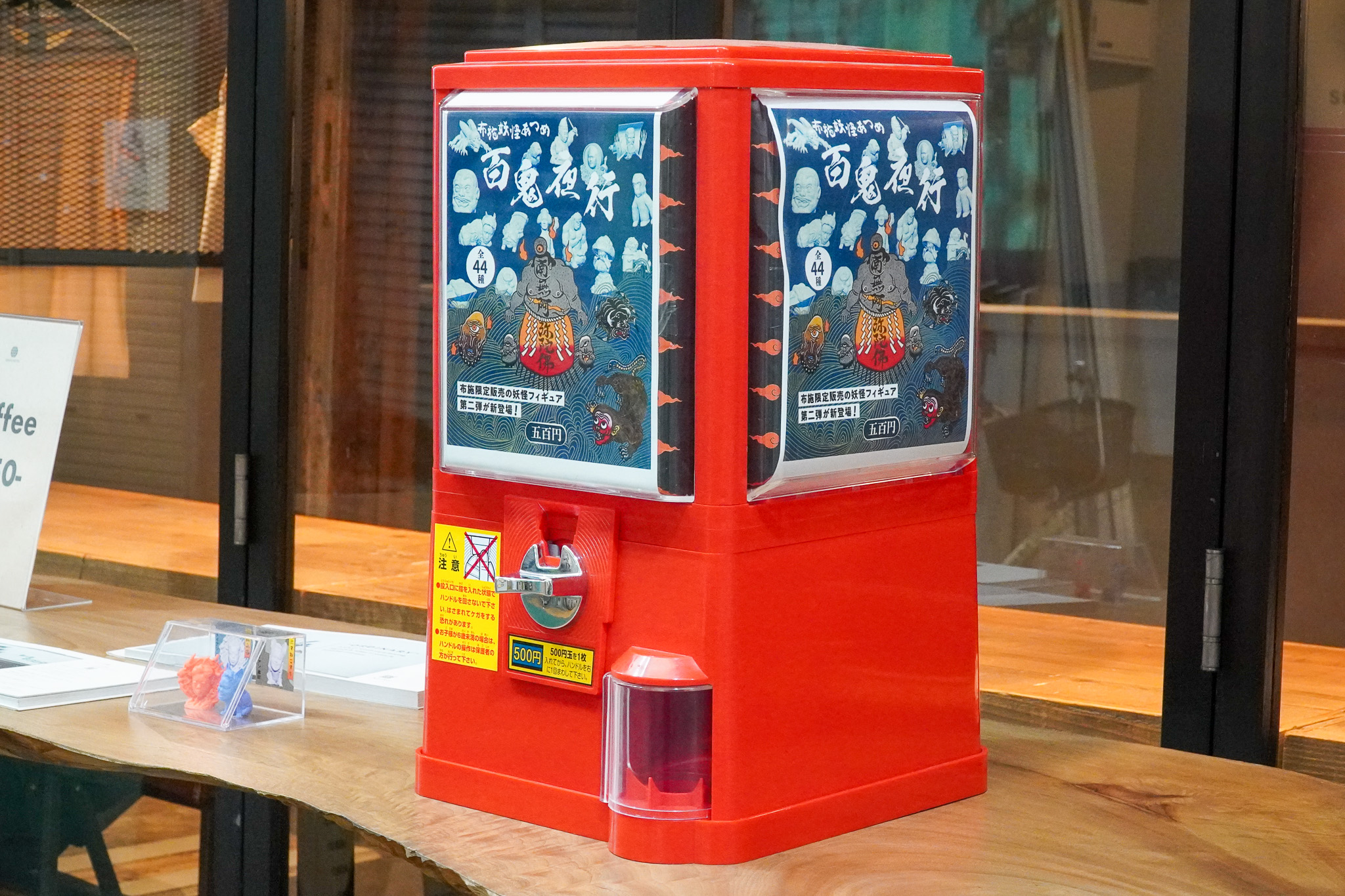
It’s not just this shop that’s part of the “otherworld.” The entire town of Fuse is gradually coexisting with yokai.
Take the red vending machine, for example. It’s actually the shop owner transformed into a yokai. When you turn the handle, small figurines or gift certificates pop out. It’s a natural blend of playfulness and business—and it feels just right.
Whether it’s a child passing by or a local grandpa who isn’t even a tourist, everyone stops in their tracks. That’s the natural rhythm of this town.
The Day the Yokai Walk the Streets
And then, once a year, “new yokai” appear in Fuse’s shopping district.
Original yokai created by professors at Kyoto University of the Arts march along, step by step. They’re somewhat mysterious, yet humorous. The boundary between reality and fantasy begins to blur.
On that day, the town feels a little festive, yet it’s also just like any other day. It’s a time when yokai are portrayed not as something special, but as “beings that live among us.”
Mysterious, a little scary, yet incredibly familiar
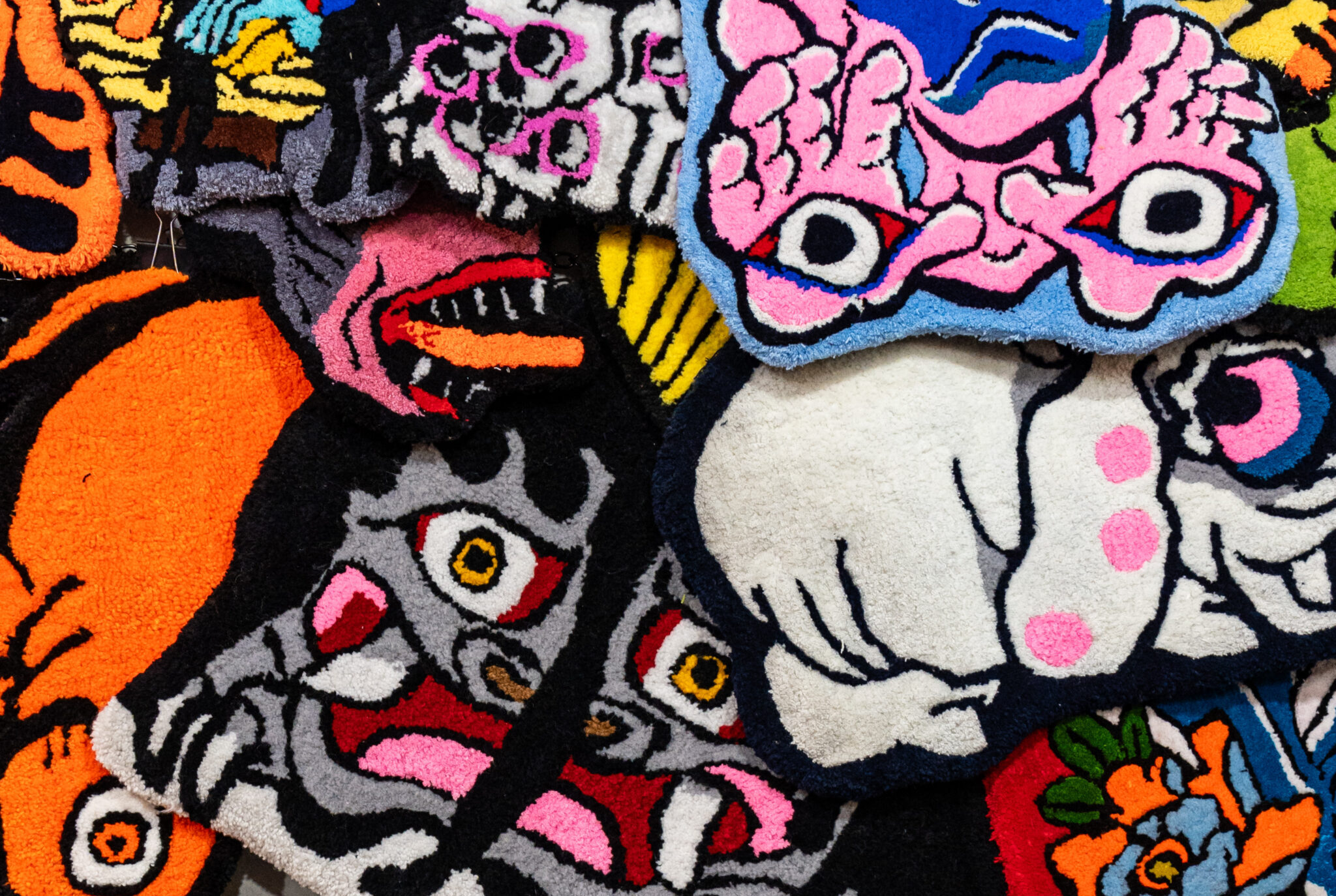
The “Biri Biri Monster” yokai have a nostalgic feel to them. They make people laugh, give them a little start, and yet still have a rightful place in everyday life.
Mysterious, a little scary, and somehow endearing. Fuse is a town where such yokai quietly coexist. Even today, they might be watching us from somewhere, from behind a pane of glass.
![Why There’s a Pizza Place in This Town. [That’s PIZZA Fuse Branch | Pizza]](https://www.sekaihotel.jp/wp-content/uploads/2025/05/DSC03395-768x511.jpg)
![Gentle white rice on a night in the downtown neighborhood [Onigiri Specialty Shop | Shiki-Wami]](https://www.sekaihotel.jp/wp-content/uploads/2025/05/IMG_6536-768x512.jpg)
![The Taste of Coming Home: From Mom’s Kitchen [Chingu | Korean Cuisine]](https://www.sekaihotel.jp/wp-content/uploads/2025/06/DSCF7839-768x576.jpg)
![Toward the gateway to dreams, watched over by kokeshi dolls. [Kikaya: Daydream]](https://www.sekaihotel.jp/wp-content/uploads/2025/06/DSC04960-768x512.jpg)
![What’s wrong with making udon the star of the show? [Taira Udon | Udon Sukiyaki]](https://www.sekaihotel.jp/wp-content/uploads/2025/06/DSC06237-768x511.jpg)
![A night when the sound of sizzling meat soothes the soul. [Niku-shō Jin | Sukiyaki]](https://www.sekaihotel.jp/wp-content/uploads/2025/06/DSC03021-768x513.jpg)
![Its status as the No. 2 sauna in Japan was proven by “Oropó and takoyaki.” [Yu-Topia | Health Land]](https://www.sekaihotel.jp/wp-content/uploads/2025/06/3B586DE7-4B46-4FC2-BD36-446976F3F18D-768x512.jpeg)
![Beyond the “senbero,” laughter echoes. [Tachinomi Hachiban | Izakaya]](https://www.sekaihotel.jp/wp-content/uploads/2025/06/DSC05735-768x511.jpg)
![Beyond the white walls, a little piece of France was in full bloom [Jardin des Lums | French Cuisine]](https://www.sekaihotel.jp/wp-content/uploads/2025/06/DSC05910-2-768x511.jpg)
![A Day That Starts with a Mixed Juice You “Eat” Rather Than “Drink” [Café More Main Store | Coffee Shop]](https://www.sekaihotel.jp/wp-content/uploads/2025/06/DSC06574-768x511.jpg)
![Morning service is available until 3:00 p.m., perfect for those who aren’t morning people. [Amerika-tei | Coffee Shop]](https://www.sekaihotel.jp/wp-content/uploads/2025/06/DSC06543-768x511.jpg)
- エリアAREA
- All
- Deep Osaka
- カテゴリーCATEGORY
- All
- Souvenirs
- Personal experience
- Bath
- Sightseeing Spot
- Food
- タグTAG
- After 22:00
- Asian and International
- Bar
- Bread & Sweets
- Café
- Coffee Shop
- Flour-based foods
- Izakaya
- Japanese cuisine
- meal
- Meat Dishes
- Open for lunch
- Popular restaurant known by those in the know (Fuse)
- Recommended for families (Fuse)
- set meal
- Showa Retro (Fuse)
- Souvenirs
- Standing Bar
- Sushi & Seafood
- Udon and Soba
- Western-style cuisine
- スイーツ(布施)
- 写真に残したい(布施)
- 創業50年以上(布施)
- 大阪のノリを感じられる(布施)
- 常連さんと肩を並べて過ごす(布施)
- 食べ歩き(布施)