The Second-Generation Owners Preserve the Flame, the Sauce, and the Town’s Nights. [Kushiyaki Bar Kanpachi | Yakitori Restaurant]
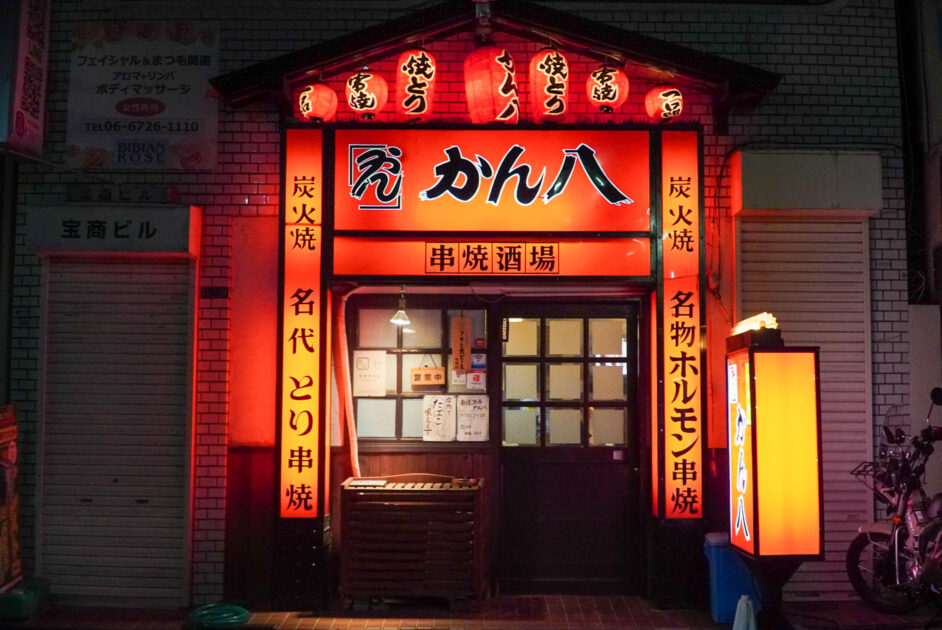
There’s a red light in the town of Fuse. That sign, standing alone in the gap between multi-tenant buildings, has a slightly bold hue, yet strangely blends right into the townscape. The yakitori restaurant “Kanpachi” was founded at the end of the Showa era, and before anyone realized it, it had long since passed the 40-year mark.
Standing before the grill is the second-generation owner. He didn’t learn the trade directly from his mother. Instead, he quietly observed the flames and her hands, absorbing the flavors through his own experience. In an interior that reflects the couple’s personal tastes and affection, another skewer is sizzling on the grill today.
It’s not flashy, but it’s genuinely warm. It’s wonderful that there’s a place like this in town.
| Address | 1F, Hōshō Building, 2-1-21 Ashidai, Higashiosaka City, Osaka PrefectureGoogleMap |
|---|---|
| Phone number | 06-6736-0915 |
| Business Hours | 5:00 p.m.–11:00 p.m. |
| Closed Days | Sunday |
On a Night Bathed in Red Light
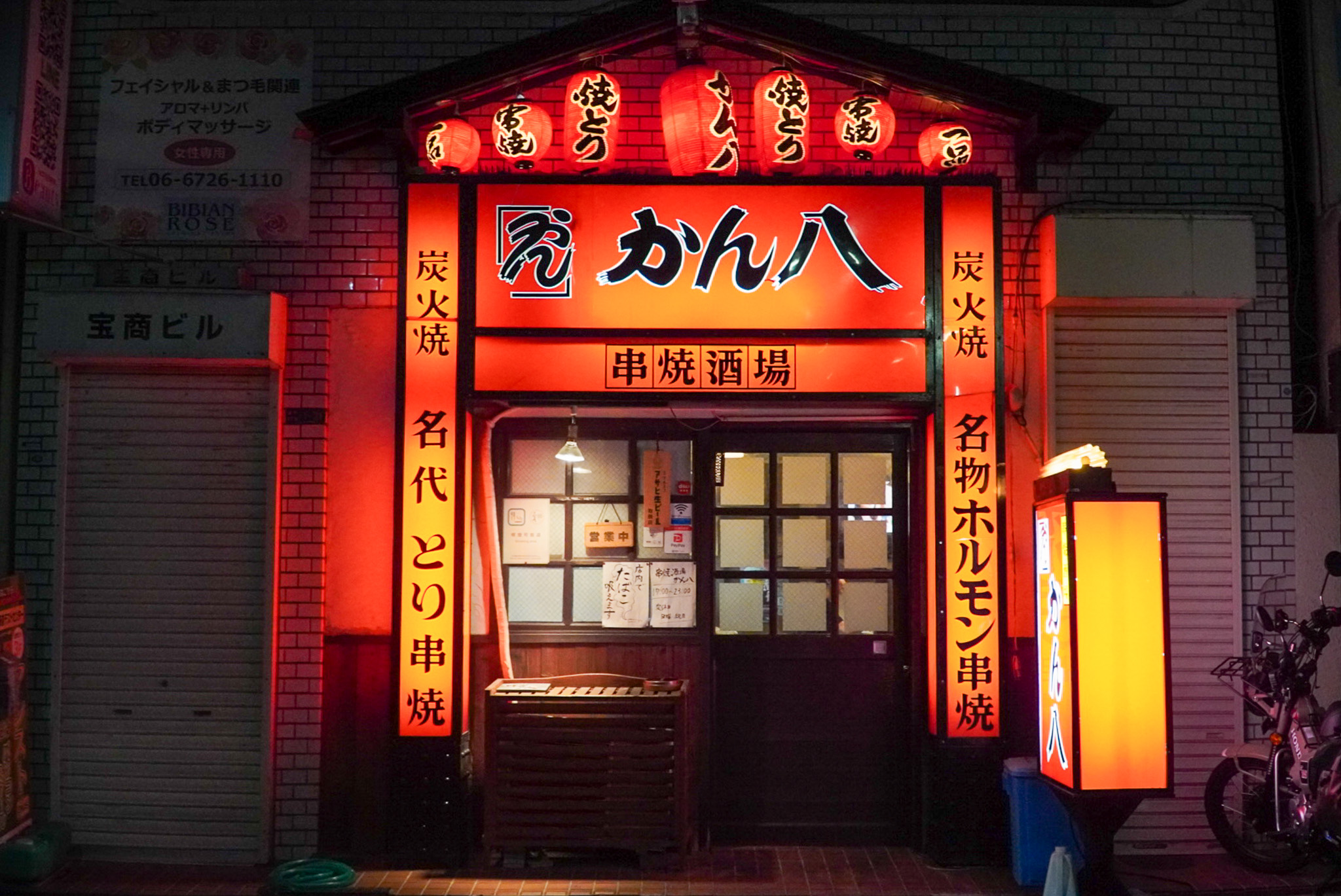
From the east exit of Fuse Station, I walk a short distance down Higashi-Ichijo Street. Suddenly, a red light that seems to pierce my vision floats between the gaps in the mixed-use buildings. The yakitori restaurant “Kanpachi”—the sheer presence of its sign is so straightforward and bold that it’s almost rare in this day and age.
“Charcoal-Grilled,” “Famous Chicken Skewers,” “Signature Offal Skewers.” The bold black lettering stands out sharply against the red sign.
Born at the end of the Showa era, the design feels somehow fresh to modern eyes and possesses an authentic, unpretentious warmth.
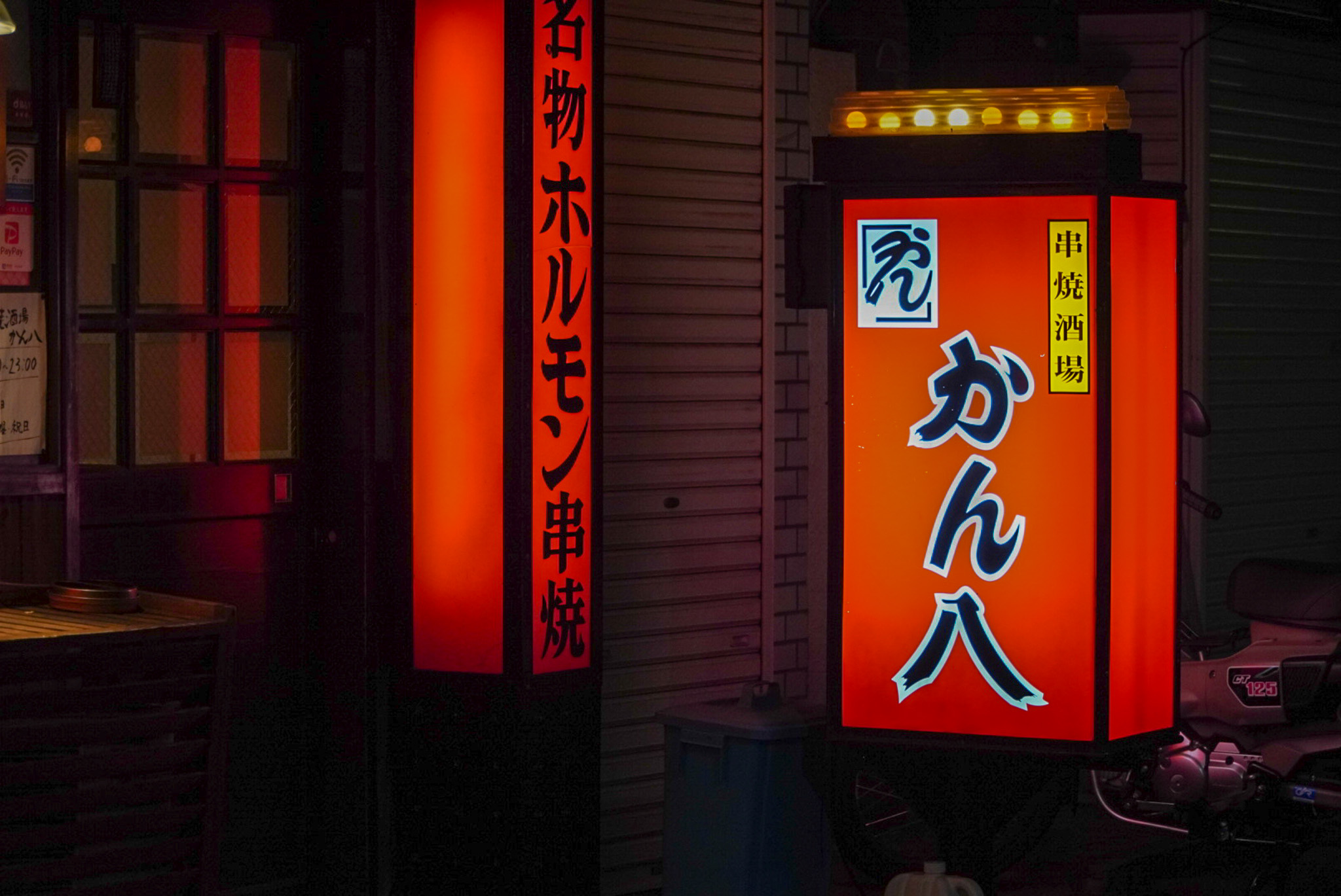
The shop opened over 40 years ago. Now, in 2025, it has become a fixture of the neighborhood. In the past, this area was lined with buildings housing securities firms and financial institutions, and it’s said that people in suits on their way home from work used to be drawn into the shop under its red glow.
Now, neighbors and families drop by casually for an evening drink. Between the end of the day and the beginning of the night, this shop glows softly.
A Wordless Legacy by the Fire
Standing before the grill is the second-generation owner. He began helping his mother—who had long run the shop alone—ten years ago (at the time of this interview in 2025). Three years ago, upon getting married, he took over the shop.
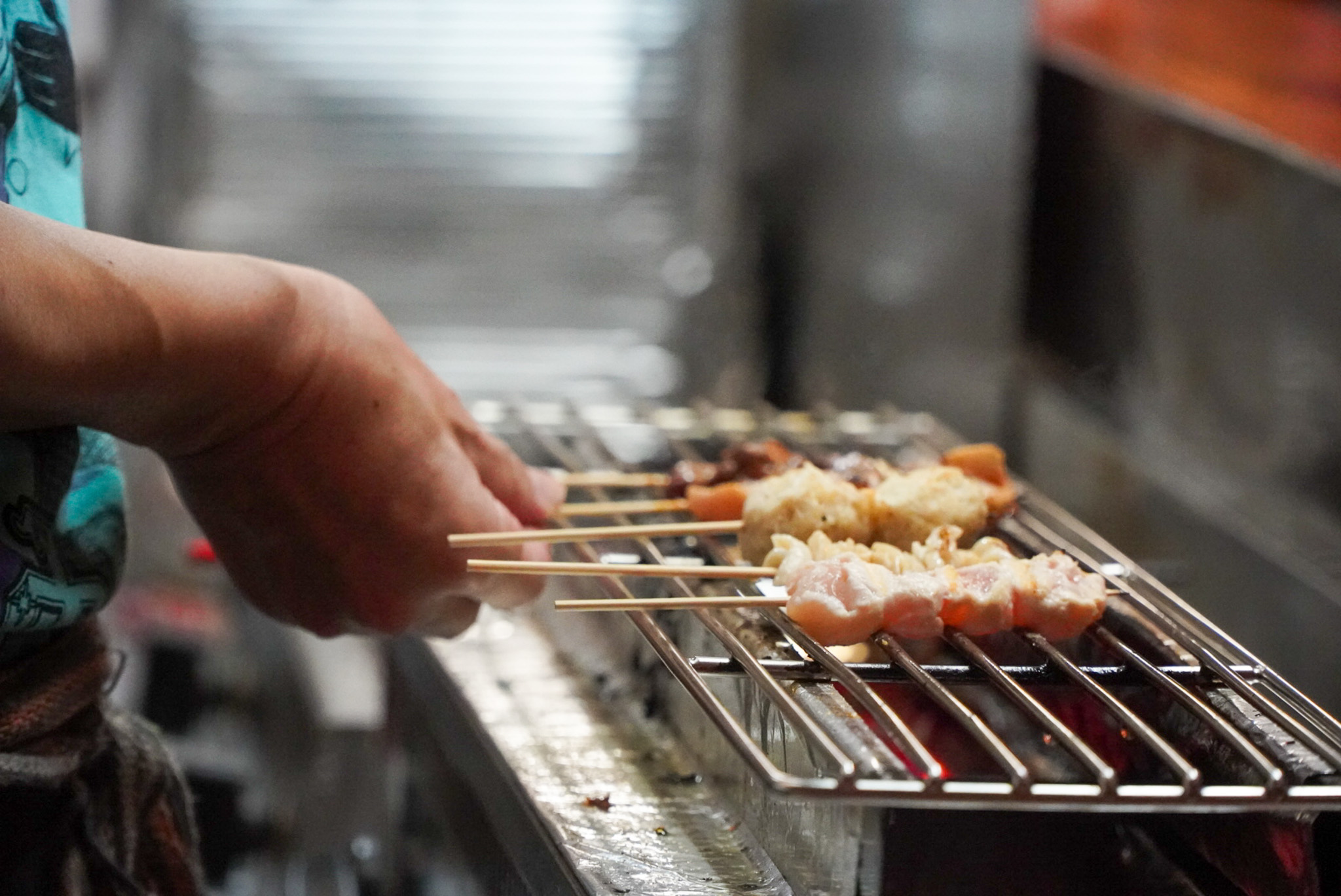
“She never taught me a single thing,” he says with a laugh, his hands moving with surprising precision. The intensity of the flame, how to turn the skewers, knowing when the food is done—he learned it all by watching his mother’s hands right beside the grill.
Watching in silence, feeling it, and repeating the motions. This shop has always practiced a wordless tradition of passing down the craft.
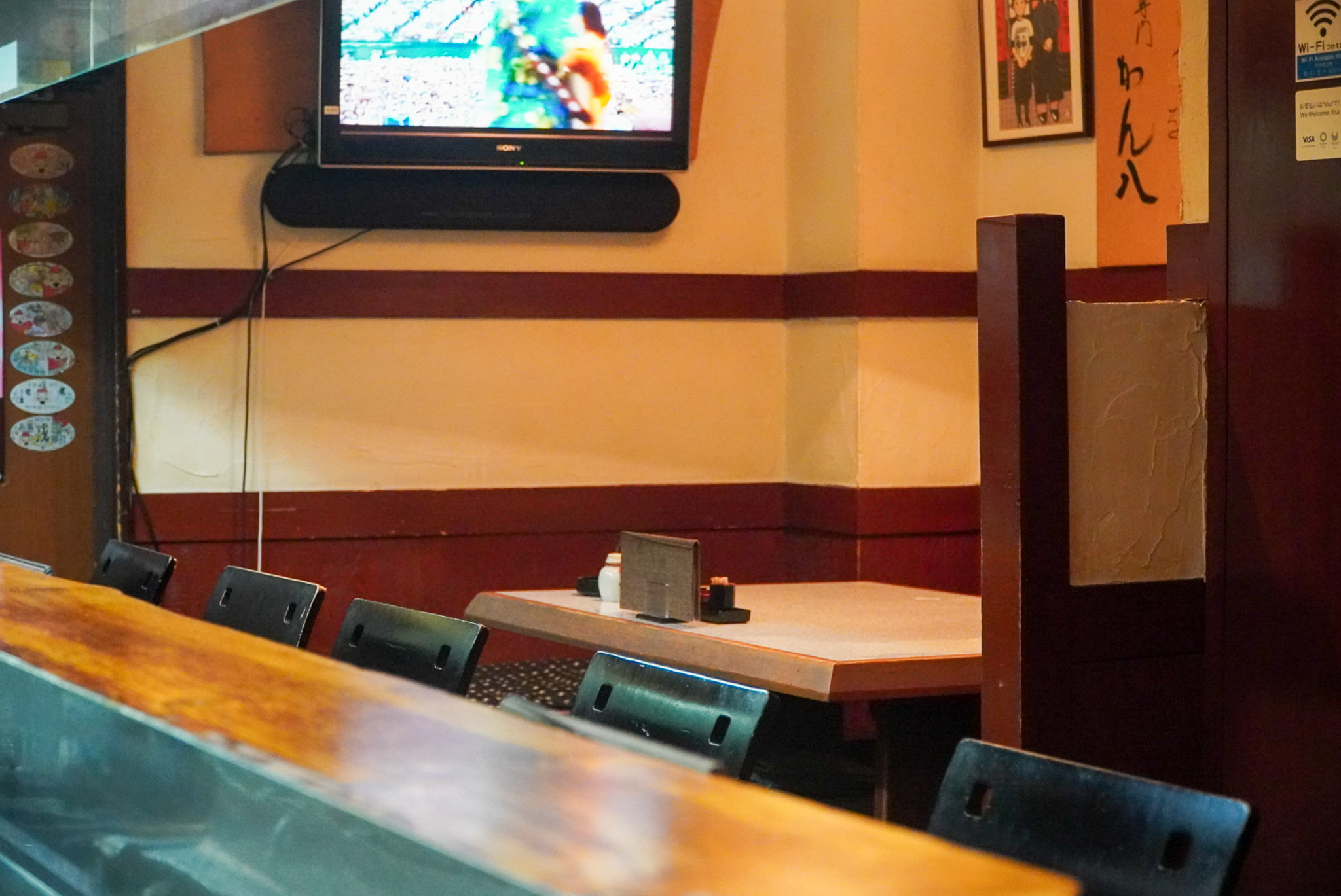
The key to the flavor is the “secret sauce,” which has been continuously replenished and passed down since the shop’s founding. It lives quietly, yet surely, inside a large earthenware jar placed in a corner of the kitchen.
Not too sweet, yet with a robust core that perfectly complements the chicken fat and smoke. Through the daily grilling, it’s added bit by bit and nurtured little by little. It seems unchanged, yet it’s truly evolving. That “taste of time” clung to every single skewer.
Skewers, sour drinks, and the start of the night
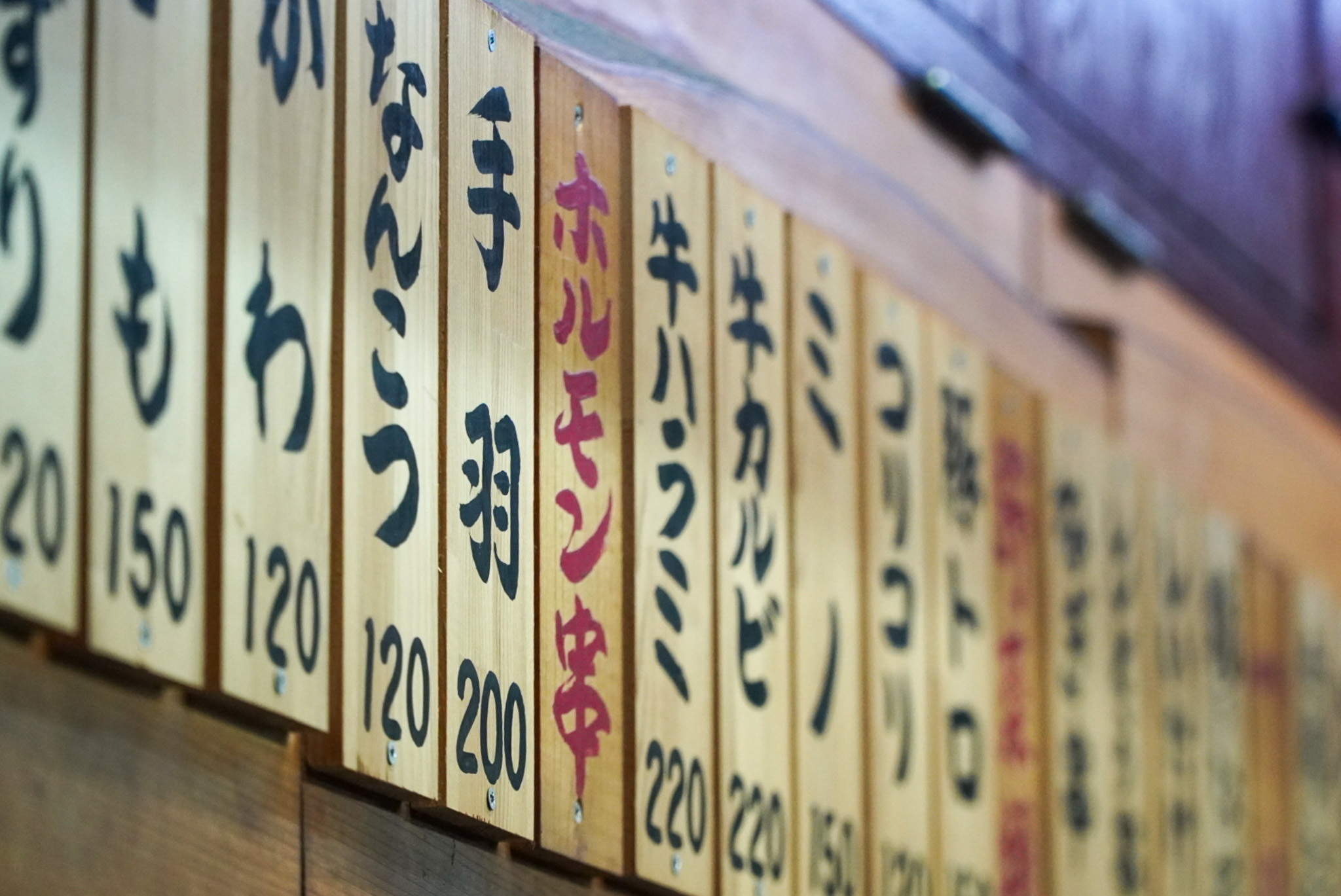
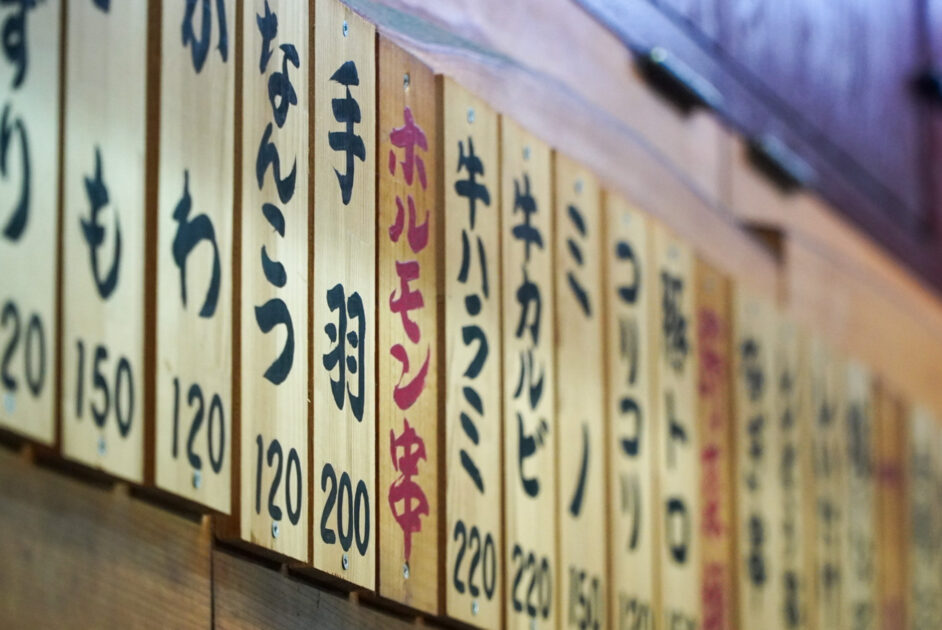
A gentle voice drifts from the back of the counter. “You can order any number of skewers you like.”
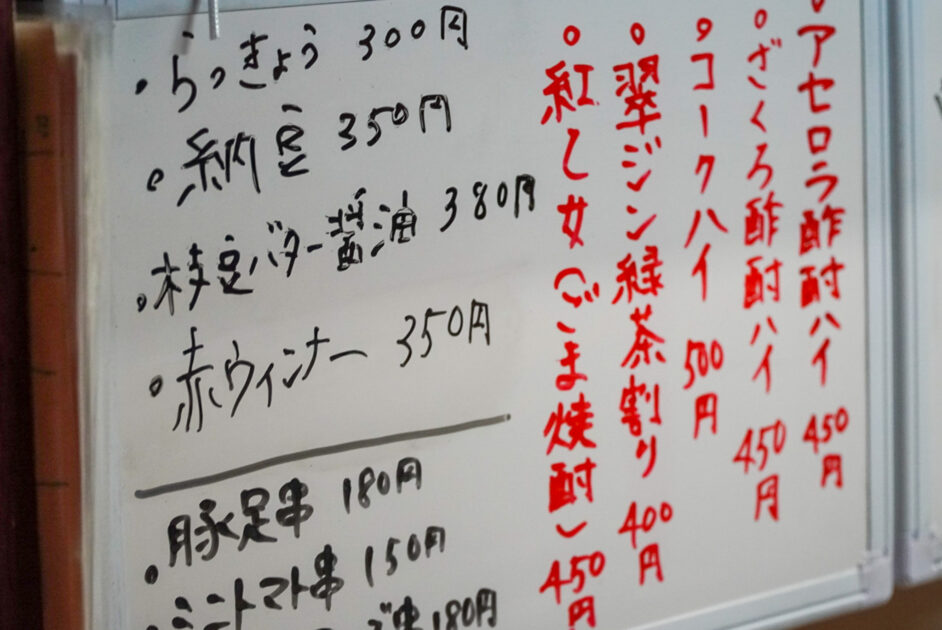
As I stood in front of the hand-drawn whiteboard, wondering which ones to choose, the owner’s wife quietly suggested the chef’s recommended “10-skewer set.” If you’re having trouble deciding between this and that, it’s a good idea to start by sharing that set.
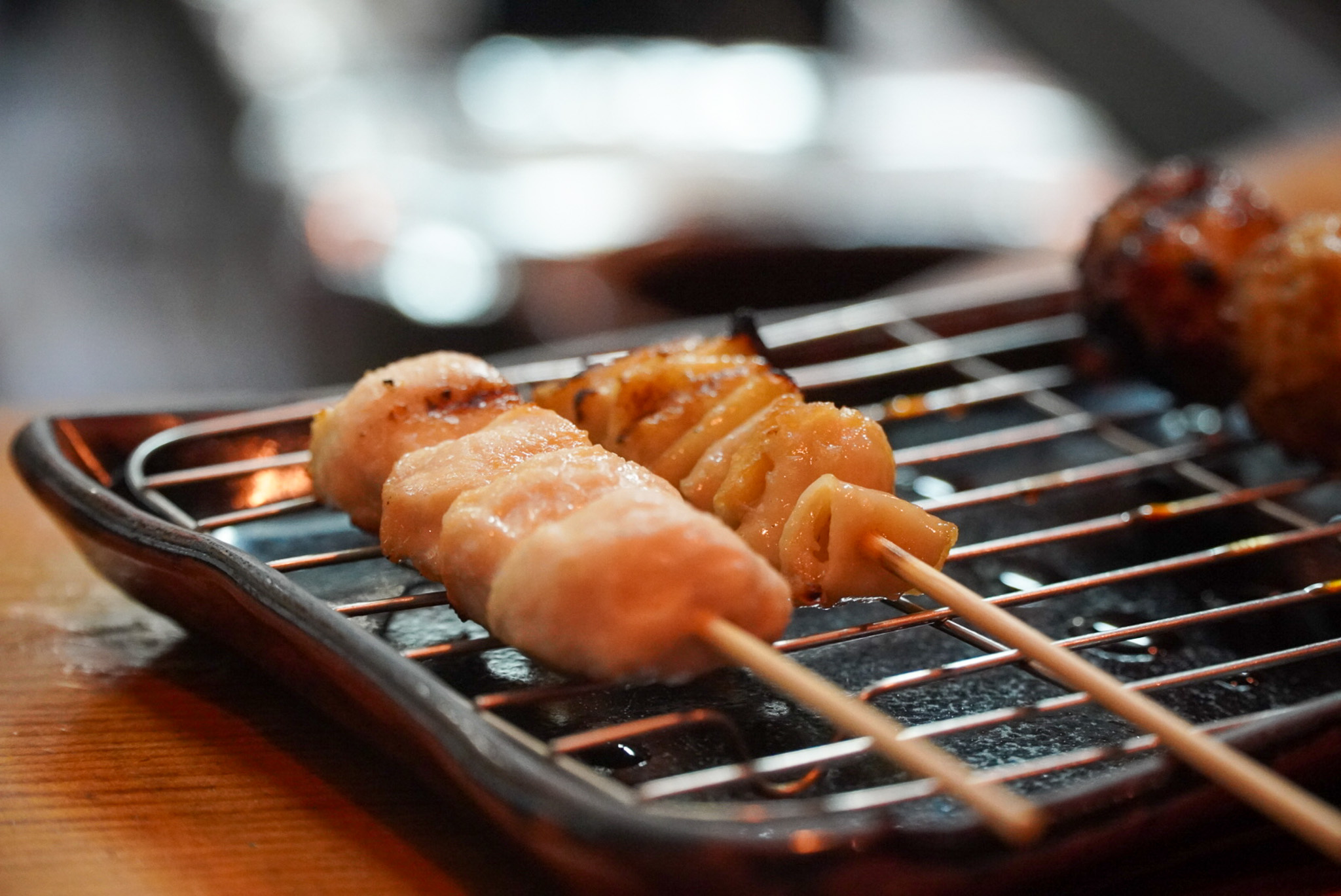
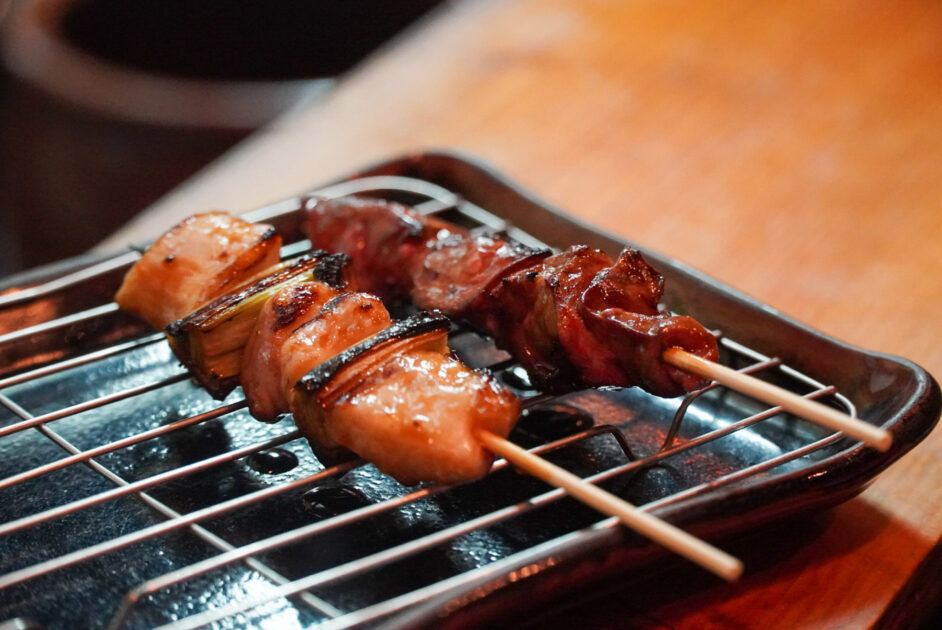
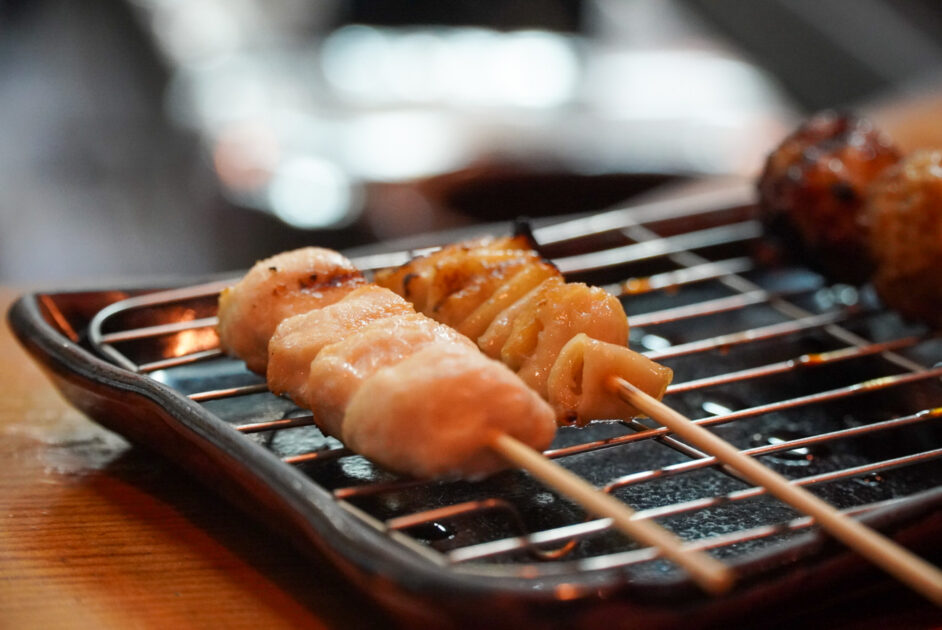
That day, we ordered negima (with sauce), liver (with sauce), chicken tenderloin (salted), and chicken skin (salted). They were grilled to perfection—the outside was fragrant and the inside remained juicy. The sweetness of the sauce blended with the aroma of charcoal, giving each skewer its own unique story.
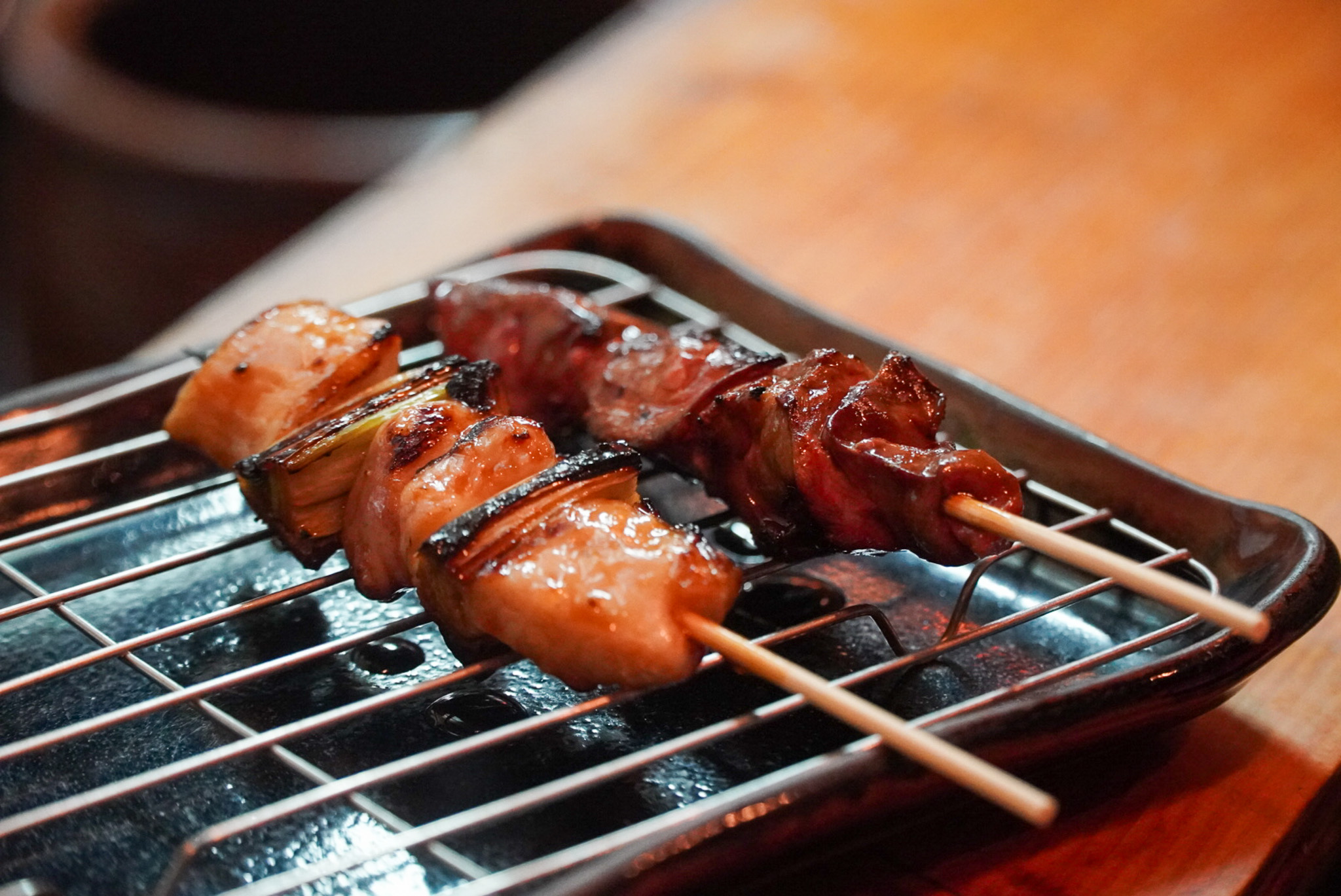
The chicken liver was particularly impressive. It had absolutely no gamey odor or heavy, bloody aftertaste. You could tell it had been carefully prepared while still fresh.
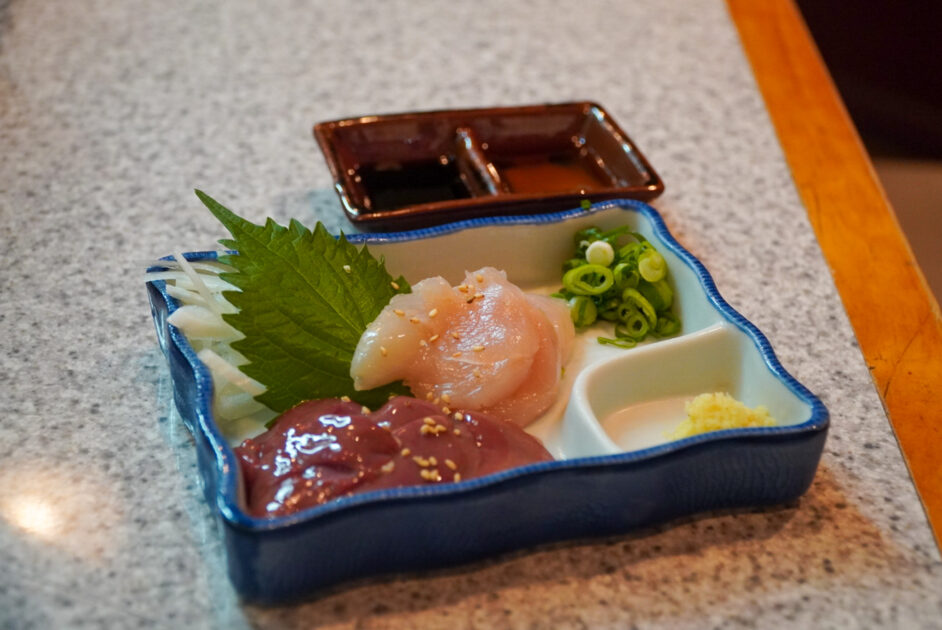
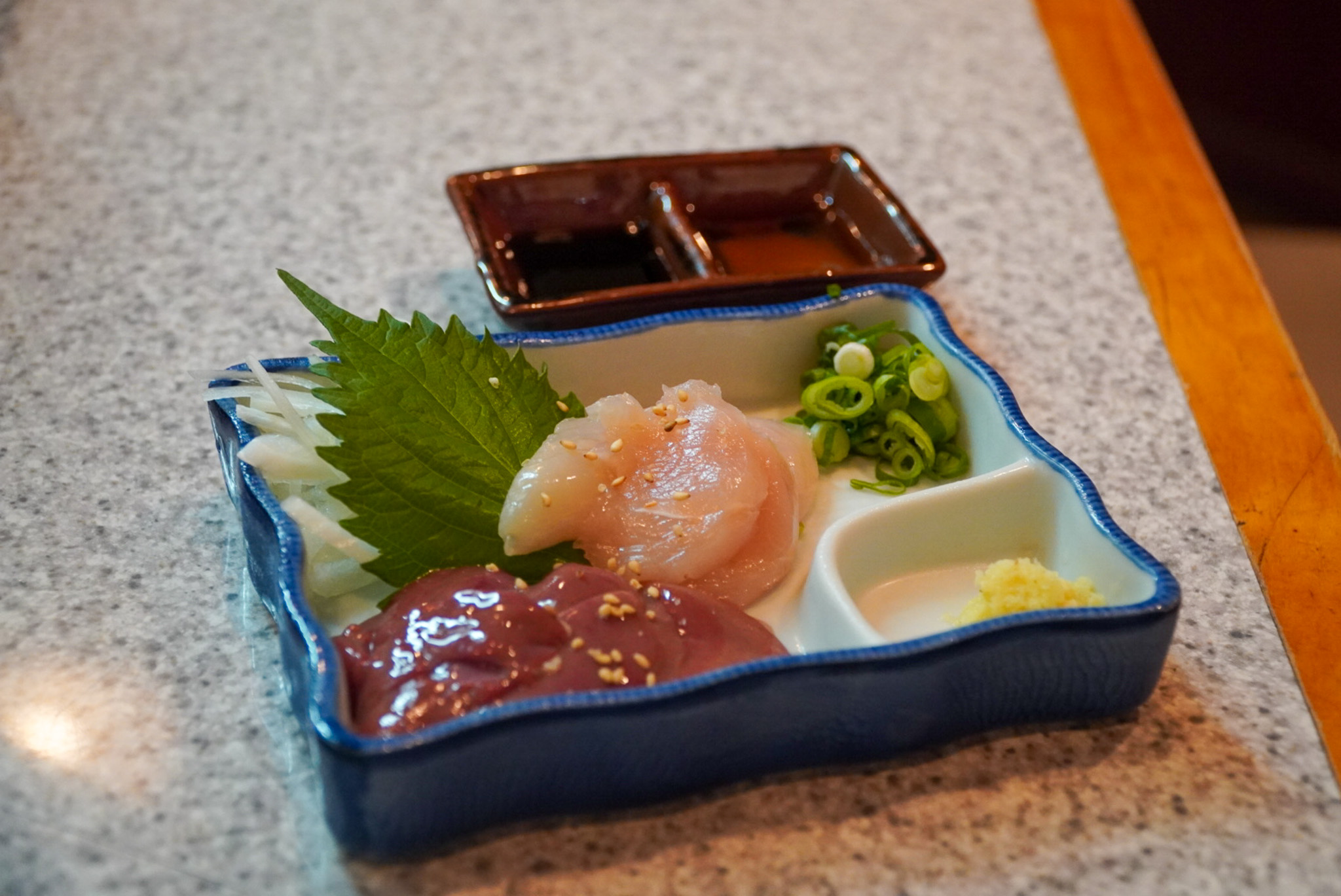
Then came the chicken sashimi. Unable to decide, I went with a two-item platter of chicken breast and liver. The chicken breast was crisp and clean, seasoned with soy sauce and wasabi. The liver was rich and creamy, seasoned with sesame oil and salt. Both went down a treat with sake.
After finishing my bottle of beer, I ordered the famous “Umeboshi Sour.” A large umeboshi plumply sat at the bottom of the glass, and amidst the tartness, there was a sense of nostalgia. It was a drink that seemed to soothe not just my throat, but my whole spirit as well.
The “True Selves” of the Two Shining Through
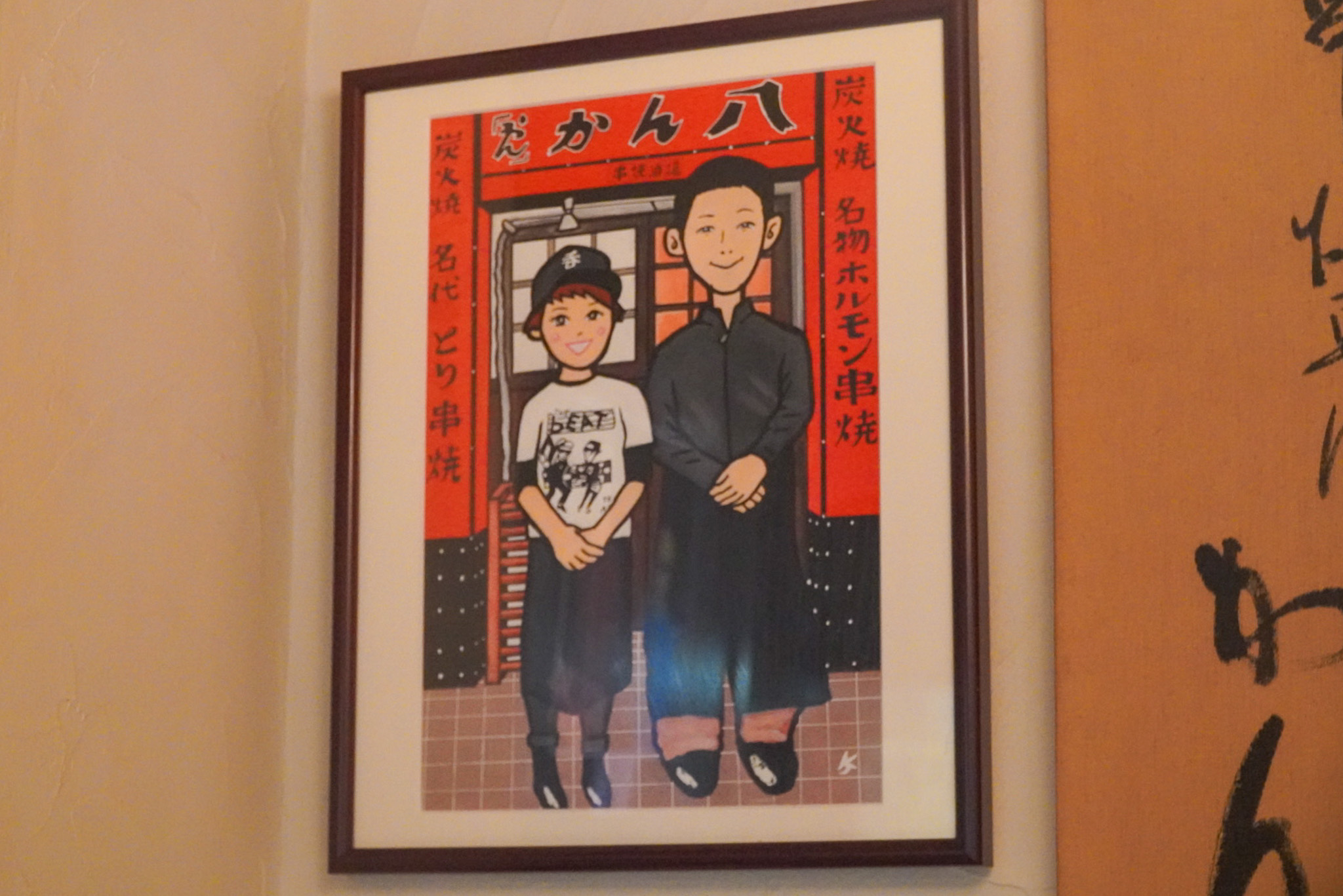
What makes Kanpachi interesting isn’t just the food. The owners’ “personal touch” truly shines through here.
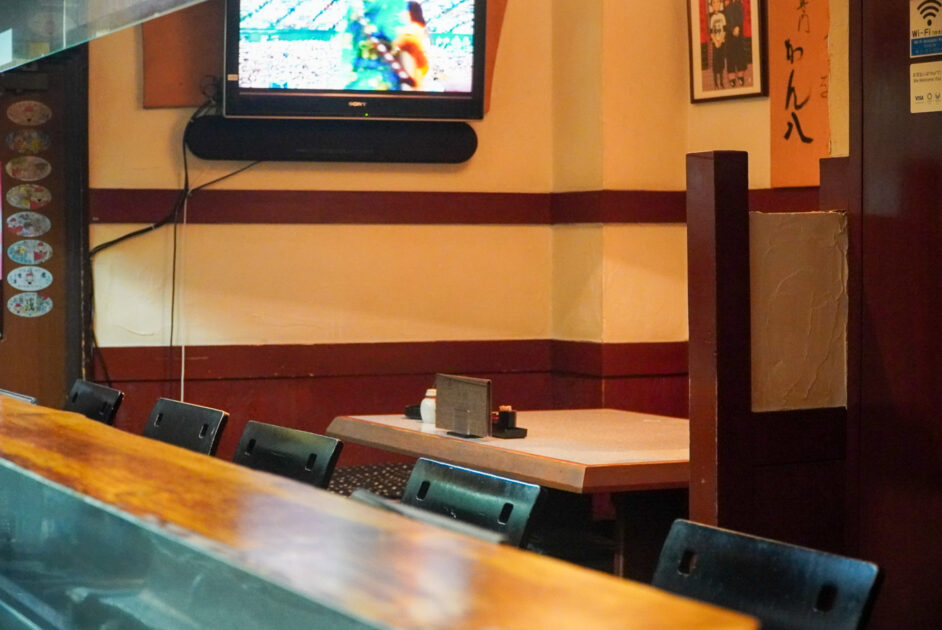
The walls are covered with posters of underground idols. Live footage of Western bands plays on the TV. This scene—unlike what you’d expect from a yakitori joint—is strangely soothing, perhaps because the two owners met through music.
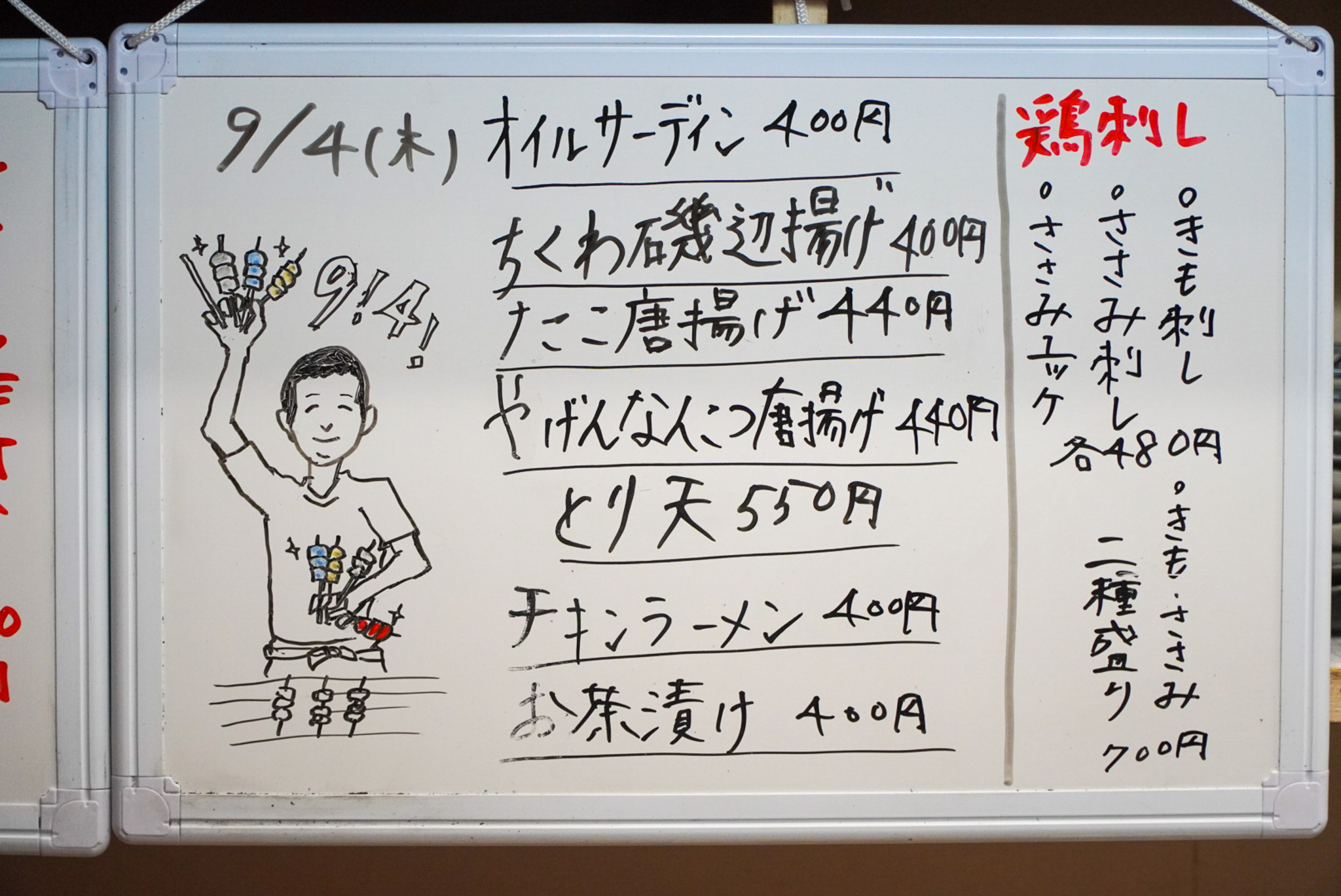
And next to the whiteboard is the “Illustration of the Day,” hand-drawn by the owner’s wife.
It just so happened to be “Skewer Day” that day, and the drawing—a rather laid-back scene—depicted the owner dancing with colorful glow sticks in both hands. This illustration is posted on social media every day. They have many secret fans, and quite a few people look forward to getting a daily glimpse of the shop’s atmosphere through these daily updates.
They’ve layered their own “authenticity” onto the fire and sauce inherited from his mother. That’s what shapes the shop’s current flavor and atmosphere.
Steam, Lights, and Beyond the Night
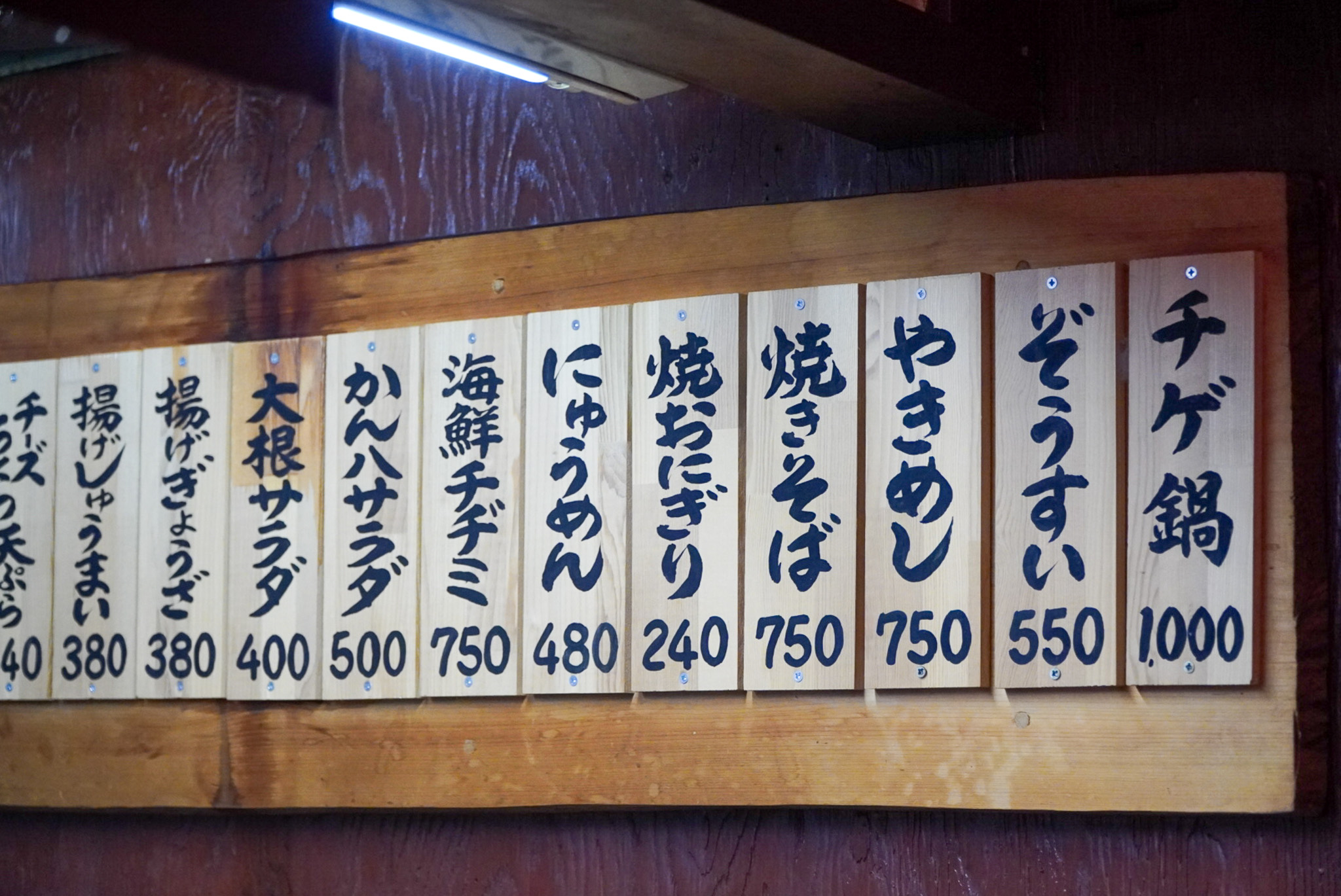
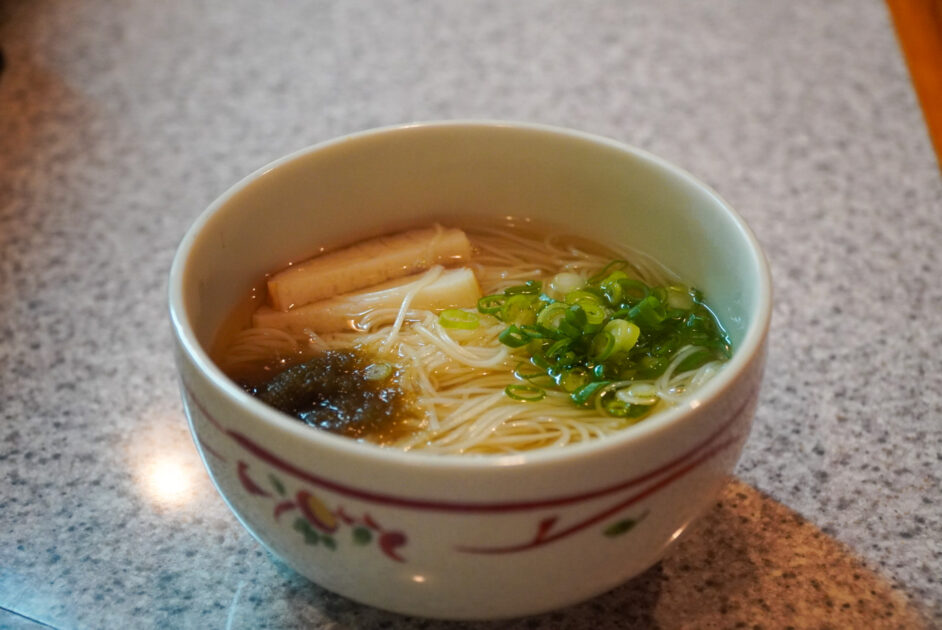
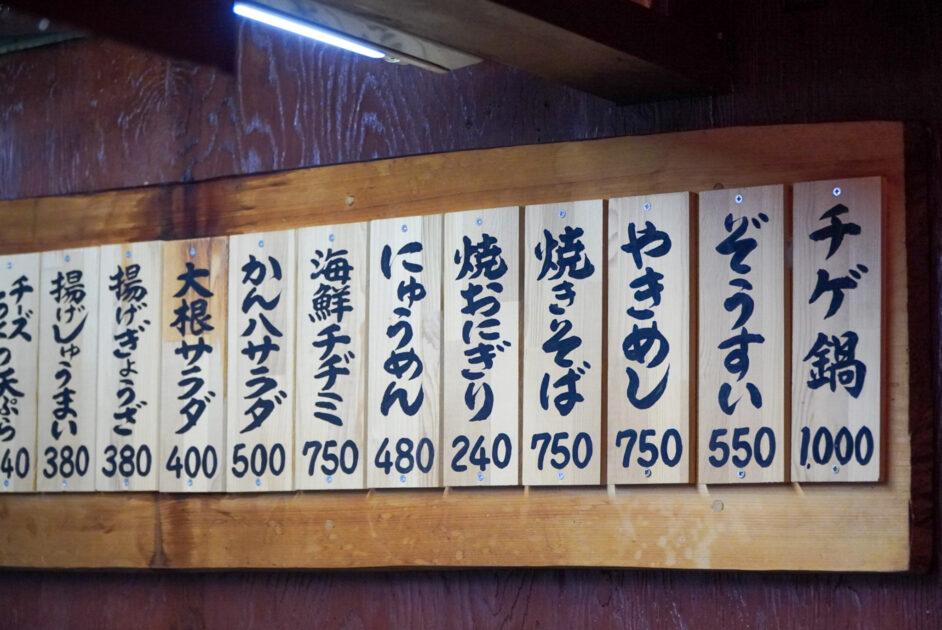
For my final dish, I ordered simmered noodles. Beyond the steam, the head chef quietly moves his chopsticks. He gently scoops up the broth left after the fire has been turned down and pours it into a white bowl.
Along with the rising steam, the scent of charcoal gently spreads through the air. I could feel the atmosphere inside the restaurant—which had been so lively just moments ago—calm down instantly. I picked up my chopsticks, took a small bite, and then quickly drained the broth in one gulp.
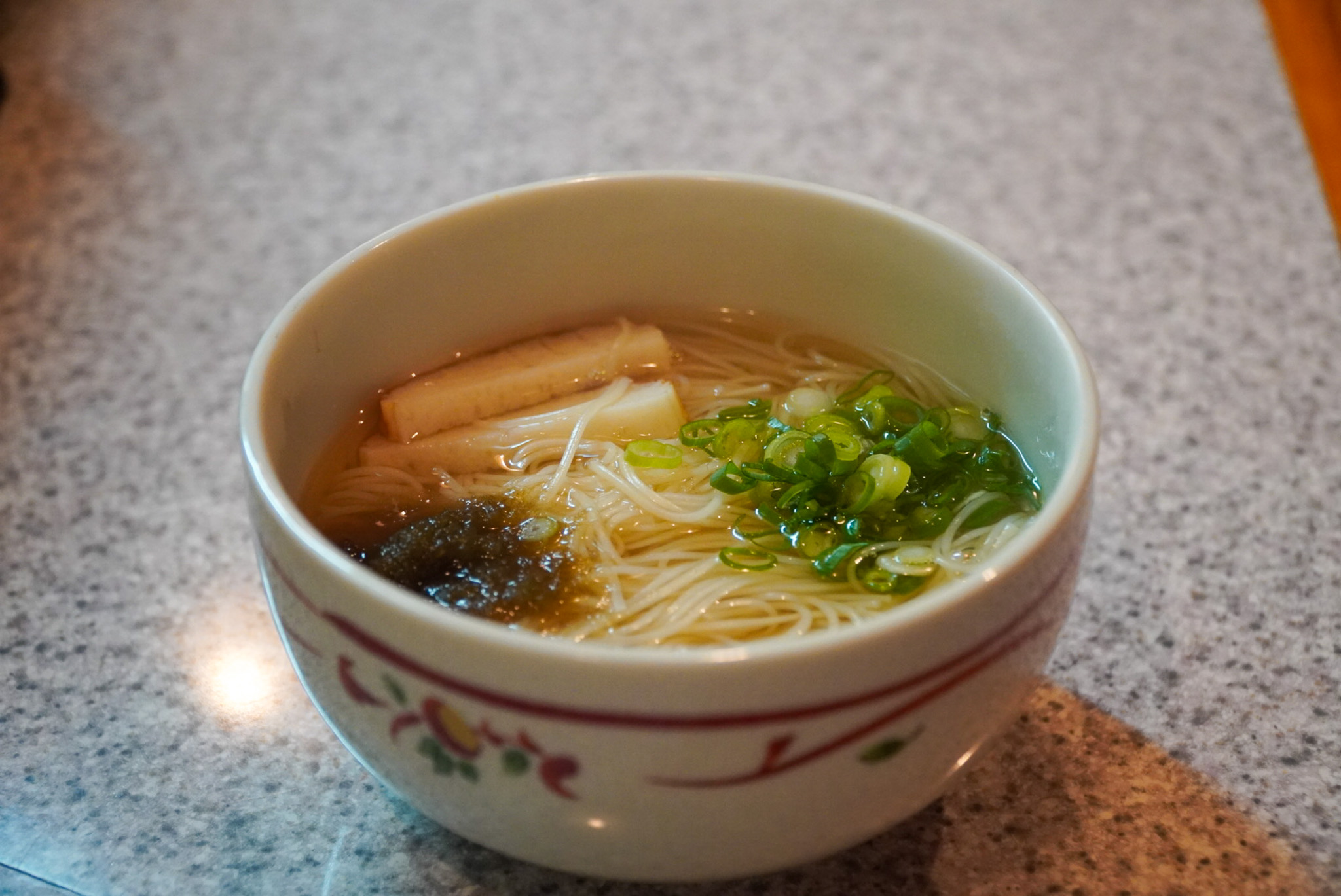
No words were needed. It was, truly, a perfect way to end the meal.
Stepping outside through the open door, the air felt crisp and cool. Glancing back, I saw that the red sign was still quietly glowing. It seemed somehow a little gentler than when I’d first entered the restaurant. Though it wasn’t flashy, I felt as if a part of my heart had been illuminated.
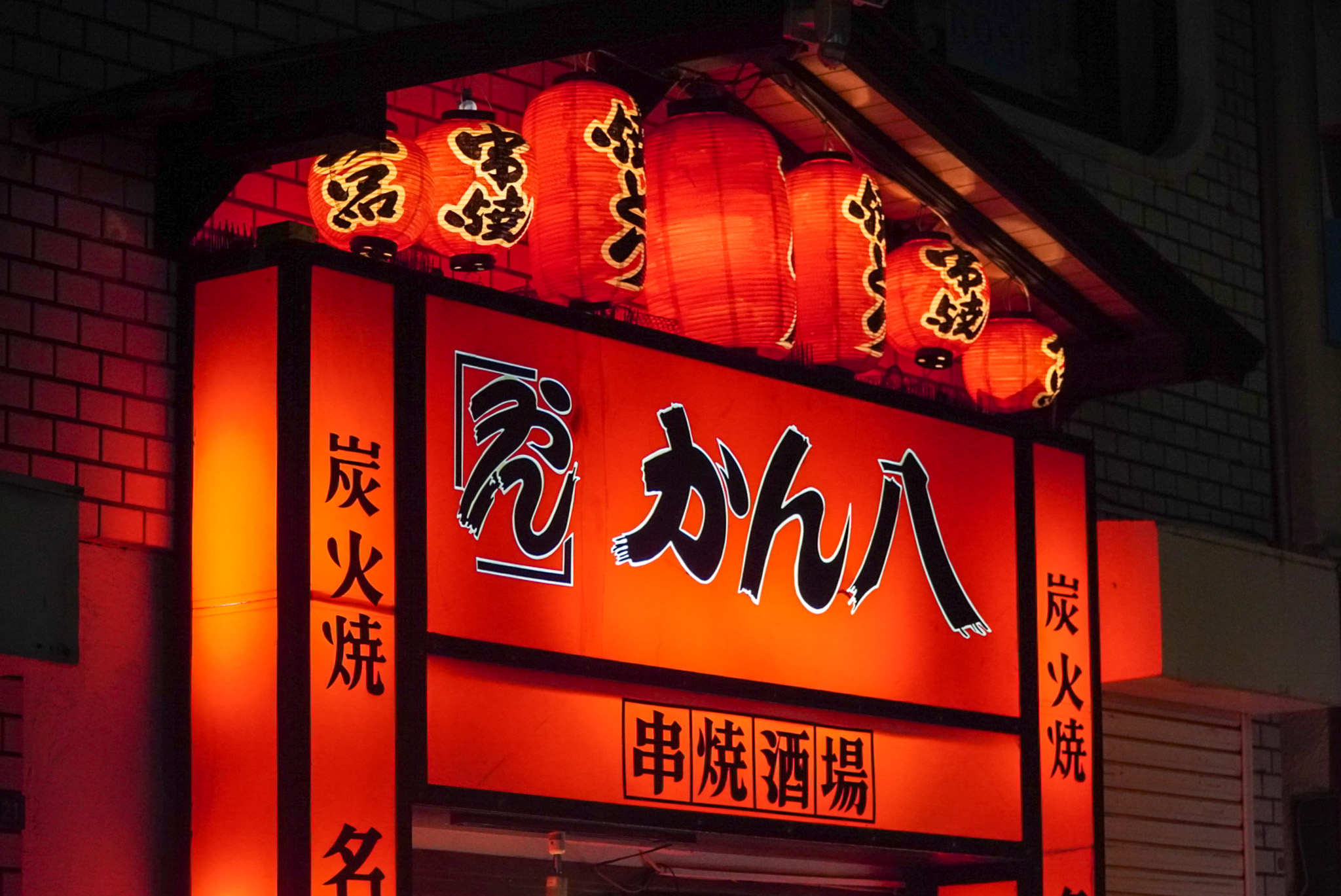
It’s not just the fire used to grill the yakitori. This light is surely illuminating someone’s day. As long as there are people who want to head toward that light again, the nights at “Kanpachi” will continue quietly into the future.
![Why There’s a Pizza Place in This Town. [That’s PIZZA Fuse Branch | Pizza]](https://www.sekaihotel.jp/wp-content/uploads/2025/05/DSC03395-768x511.jpg)
![Gentle white rice on a night in the downtown neighborhood [Onigiri Specialty Shop | Shiki-Wami]](https://www.sekaihotel.jp/wp-content/uploads/2025/05/IMG_6536-768x512.jpg)
![The Taste of Coming Home: From Mom’s Kitchen [Chingu | Korean Cuisine]](https://www.sekaihotel.jp/wp-content/uploads/2025/06/DSCF7839-768x576.jpg)
![Toward the gateway to dreams, watched over by kokeshi dolls. [Kikaya: Daydream]](https://www.sekaihotel.jp/wp-content/uploads/2025/06/DSC04960-768x512.jpg)
![Mysterious, a little scary, and somehow endearing. [Biri Biri Monster | Yokai Specialty Store]](https://www.sekaihotel.jp/wp-content/uploads/2025/06/DSC03988-scaled-e1749553316715-768x515.jpeg)
![What’s wrong with making udon the star of the show? [Taira Udon | Udon Sukiyaki]](https://www.sekaihotel.jp/wp-content/uploads/2025/06/DSC06237-768x511.jpg)
![A night when the sound of sizzling meat soothes the soul. [Niku-shō Jin | Sukiyaki]](https://www.sekaihotel.jp/wp-content/uploads/2025/06/DSC03021-768x513.jpg)
![Its status as the No. 2 sauna in Japan was proven by “Oropó and takoyaki.” [Yu-Topia | Health Land]](https://www.sekaihotel.jp/wp-content/uploads/2025/06/3B586DE7-4B46-4FC2-BD36-446976F3F18D-768x512.jpeg)
![Beyond the “senbero,” laughter echoes. [Tachinomi Hachiban | Izakaya]](https://www.sekaihotel.jp/wp-content/uploads/2025/06/DSC05735-768x511.jpg)
![Beyond the white walls, a little piece of France was in full bloom [Jardin des Lums | French Cuisine]](https://www.sekaihotel.jp/wp-content/uploads/2025/06/DSC05910-2-768x511.jpg)
![A Day That Starts with a Mixed Juice You “Eat” Rather Than “Drink” [Café More Main Store | Coffee Shop]](https://www.sekaihotel.jp/wp-content/uploads/2025/06/DSC06574-768x511.jpg)
- エリアAREA
- All
- Deep Osaka
- カテゴリーCATEGORY
- All
- Souvenirs
- Personal experience
- Bath
- Sightseeing Spot
- Food
- タグTAG
- After 22:00
- Asian and International
- Bar
- Bread & Sweets
- Café
- Coffee Shop
- Flour-based foods
- Izakaya
- Japanese cuisine
- meal
- Meat Dishes
- Open for lunch
- Popular restaurant known by those in the know (Fuse)
- Recommended for families (Fuse)
- set meal
- Showa Retro (Fuse)
- Souvenirs
- Standing Bar
- Sushi & Seafood
- Udon and Soba
- Western-style cuisine
- スイーツ(布施)
- 写真に残したい(布施)
- 創業50年以上(布施)
- 大阪のノリを感じられる(布施)
- 常連さんと肩を並べて過ごす(布施)
- 食べ歩き(布施)